
Applications of Ball Valves and Selection Guidelines
In industrial fluid control systems, ball valves are widely used due to their compact structure, quick operation, and reliable sealing performance. They are commonly applied in industries such as petrochemicals, water treatment, power generation, natural gas transmission, food processing, and pharmaceuticals. With the continuous advancement of automation, ball valves have evolved from simple shut-off devices into essential components responsible for fluid isolation and control under complex operating conditions.
This article focuses on the applications of ball valves, providing a systematic overview of their industry uses, structural features, selection considerations, and development trends to help users better understand their practical value in modern industry.
1. Basic Structure and Working Principle of Ball Valves
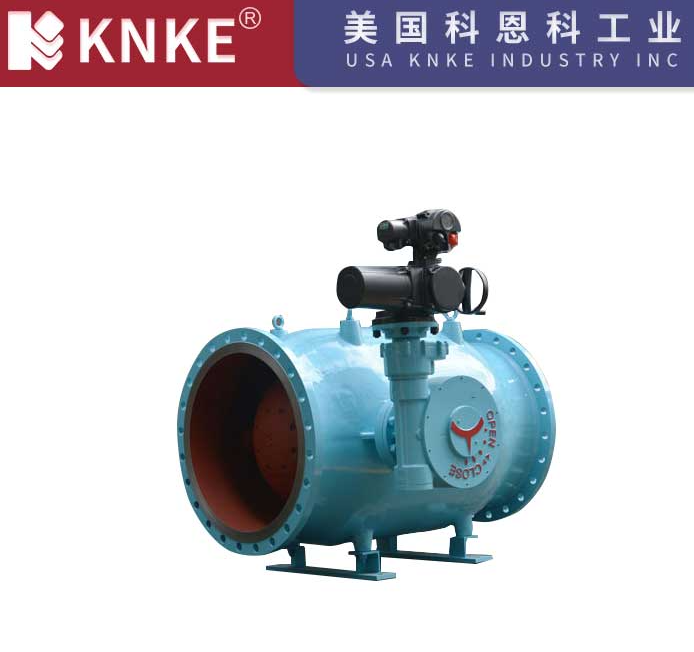
A ball valve uses a spherical disc (the ball) with a bore as the closing element. By rotating the ball 90 degrees, the valve can be fully opened or closed. The main components include the valve body, ball, stem, seat, and actuator (if automated).
When the bore of the ball aligns with the pipeline axis, fluid flows through smoothly. When rotated perpendicular to the pipeline, the flow path is blocked. Because sealing occurs between the ball and the seat surface, ball valves can achieve stable sealing performance under many operating conditions.
Depending on the driving method, ball valves can be classified as:
- Manual ball valves
- Electric ball valves
- Pneumatic ball valves
- Hydraulic ball valves
The type of actuator determines the valve’s suitability for automated systems.
2. Applications of Ball Valves in the Petrochemical Industry
In petroleum refining, chemical processing, and storage and transportation systems, pipelines often handle high-temperature, high-pressure, or flammable media. Ball valves are frequently used in emergency shut-off systems due to their low flow resistance and rapid operation.
For example, in a large petrochemical installation, high-pressure floating ball valves may be installed in raw material pipelines and paired with pneumatic actuators for remote control and interlocking management. In the event of abnormal system conditions, the valve can complete shut-off within a short time, helping reduce operational risks.
In such applications, ball valves typically need to meet requirements such as:
- High-temperature resistant materials
- Explosion-proof actuator configurations
- Compliance with relevant safety standards
3. Applications in Natural Gas and Energy Transmission Systems
Natural gas transmission pipelines require high sealing reliability. Fully welded ball valves and trunnion-mounted ball valves are widely used in this field. Their structural design helps reduce leakage risks and allows for underground installation.
In city gas pressure regulating stations or distribution stations, electric or pneumatic ball valves are often integrated with flow meters and pressure sensors to form automated control units, enabling sectional control and remote monitoring.
In liquefied natural gas (LNG) systems, cryogenic ball valves are designed for low-temperature environments. Extended stem designs help reduce the impact of cold temperatures on the packing area.
4. Applications in Water Treatment and Environmental Protection
In municipal water supply, wastewater treatment, and industrial circulating water systems, ball valves are commonly used for pipeline isolation and equipment maintenance. Since water may contain particulate matter, hard-seated ball valves are sometimes selected to improve wear resistance.
In reclaimed water reuse systems, electric ball valves work in conjunction with automated control systems to achieve timed opening and closing or flow control. Their relatively simple structure and convenient maintenance make them suitable for high-frequency operation.
5. Applications in the Food and Pharmaceutical Industries
The food processing and pharmaceutical industries require strict hygienic standards. In these environments, stainless steel sanitary ball valves are typically used, with polished internal surfaces to minimize media retention.
In a beverage production facility, pneumatic ball valves may be integrated with CIP (Clean-in-Place) systems to enable automatic switching and online cleaning. Their structural design helps reduce dead zones and supports compliance with hygiene regulations.
6. Key Considerations for Ball Valve Selection
Proper selection is essential to ensure stable system operation. The following factors should be considered:
- Medium characteristics – Whether the fluid contains particles or is corrosive.
- Operating pressure and temperature range – Determines valve body and sealing material selection.
- Actuation requirements – Whether remote control or automated interlocking is needed.
- Installation space limitations – Selection between floating or trunnion-mounted structures.
- Sealing performance requirements – Whether bidirectional sealing or zero-leakage grade is required.
Comprehensive evaluation of these parameters improves compatibility between the valve and the overall system.
7. Development Trends of Ball Valves
With the advancement of industrial automation and digitalization, ball valves are developing in the following directions:
- Integration with intelligent actuators
- Condition monitoring and remote diagnostics
- Application of advanced sealing materials
- Modular design for easier maintenance
In large-scale engineering projects, ball valves are increasingly integrated into overall control systems rather than functioning as standalone pipeline components. When combined with DCS and PLC systems, they enable more refined and efficient fluid management.
In summary, ball valves play an important role in industries such as petrochemicals, natural gas transmission, water treatment, food processing, and pharmaceuticals. Their simple structure, convenient operation, and broad adaptability make them common control devices in industrial pipeline systems.
Through proper selection and configuration based on specific operating conditions, ball valves can contribute to improved system stability and operational safety. As technology continues to advance, ball valves are expected to demonstrate broader application value in increasingly automated environments.