
How to Choose an Imported Valve Manufacturer? | USA KNKE
Choosing the right imported valve manufacturer is an important step in industrial projects. Selecting imported valves is not only about comparing prices and models, but also about evaluating technical support, product suitability, delivery coordination, and long-term service.
Many companies face similar challenges during the purchasing process. Technical specifications may be difficult to understand. Engineers may need help confirming whether a valve matches the actual application. Different suppliers may provide different solutions. Delivery schedules and technical support may also influence project progress.
These challenges usually focus on several key areas, including valve selection, quality evaluation, delivery management, purchasing procedures, and after-sales support.
USA KNKE INDUSTRY INC is headquartered in Colorado, USA. The company provides fluid control products and solutions, including valves, flow meters, pumps, and actuators.
KNKE Industry (Shenzhen) Co., Ltd. operates as the wholly-owned holding company of USA KNKE INDUSTRY INC in China. It is responsible for sales and service in the Asia-Pacific market.
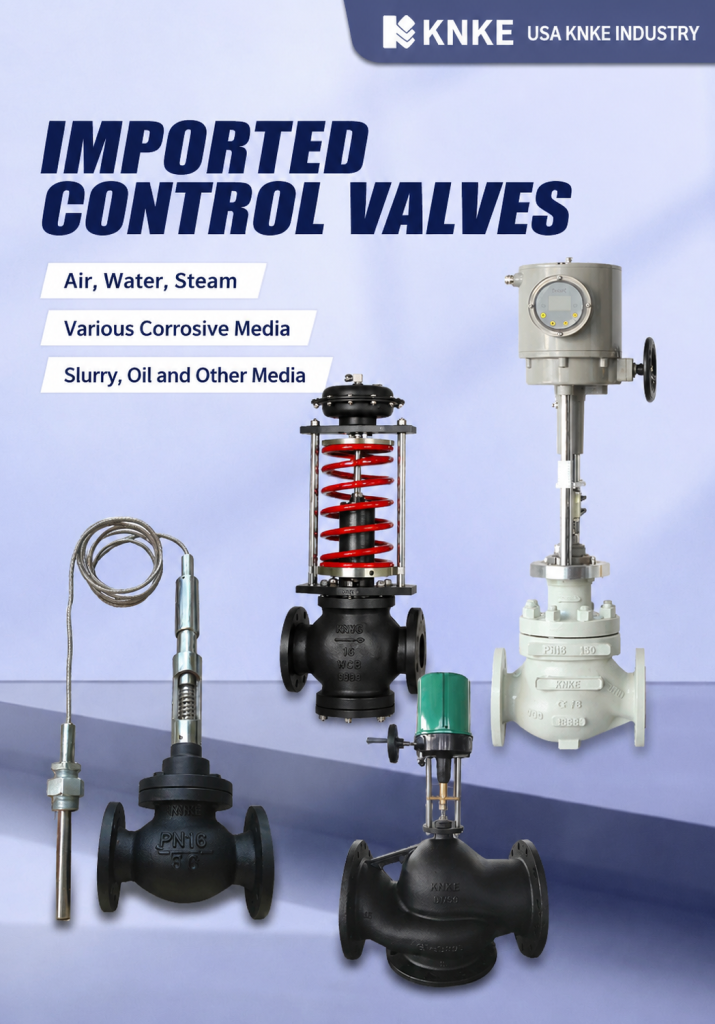
The product range includes imported ball valves, imported butterfly valves, imported control valves, imported globe valves, and imported solenoid valves. KNKE helps users select suitable products according to different industrial requirements and operating conditions.
Imported Valve Selection Requires Accurate Application Analysis
Many users search for “imported valve manufacturers” or “imported valve brands” because they need a practical method to select suitable products.
Industrial valves are not ordinary standard components. A correct selection requires more than checking the pipeline diameter. Engineers need to consider the complete operating environment before confirming the valve model.
A DN100 imported valve may have different requirements in different systems.
A circulating water system usually focuses on stable operation, flow control, and frequent opening and closing performance.
Chemical pipelines require more attention to medium characteristics, corrosion resistance, valve body materials, and sealing structures.
Automated production lines may require electric actuators or pneumatic actuators to achieve remote operation and automatic control.
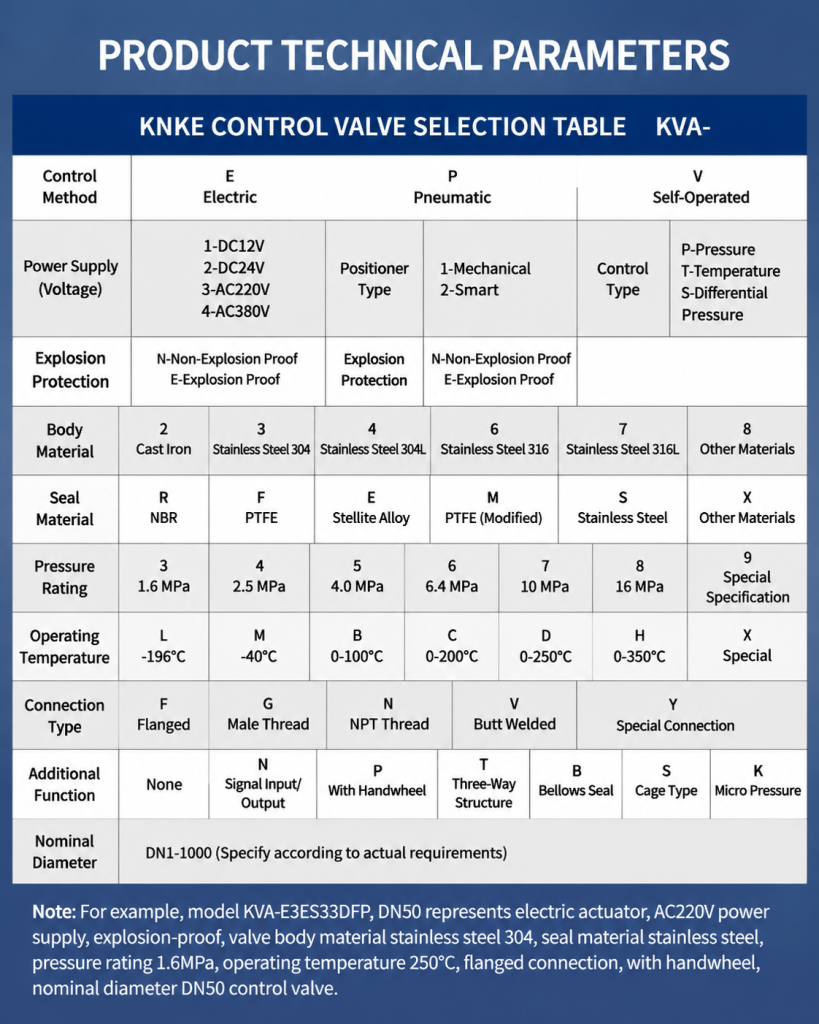
Before selecting an imported valve, users normally need to confirm several important parameters:
- Medium type;
- Working pressure;
- Operating temperature;
- Connection method;
- Valve body material;
- Control method.
KNKE reviews these operating conditions and recommends suitable valve types, structures, and drive systems. This process helps users reduce problems caused by incorrect model selection and improves the efficiency of project communication.
Imported Valve Quality Depends on Technical Details
Industrial users often ask an important question:
Can the valve meet long-term operating requirements?
During daily operation, valves may experience pressure changes, temperature fluctuations, medium impact, and repeated switching cycles.
Several elements influence valve performance, including:
- Material selection;
- Structural design;
- Sealing configuration;
- Manufacturing process.
General industrial water systems often use carbon steel and stainless steel valves because these materials can meet common application requirements.
Chemical transportation requires materials that match the properties of the medium. Corrosion resistance and sealing performance become important factors during product selection.
High-temperature or high-pressure applications require careful evaluation of valve strength and sealing material compatibility.
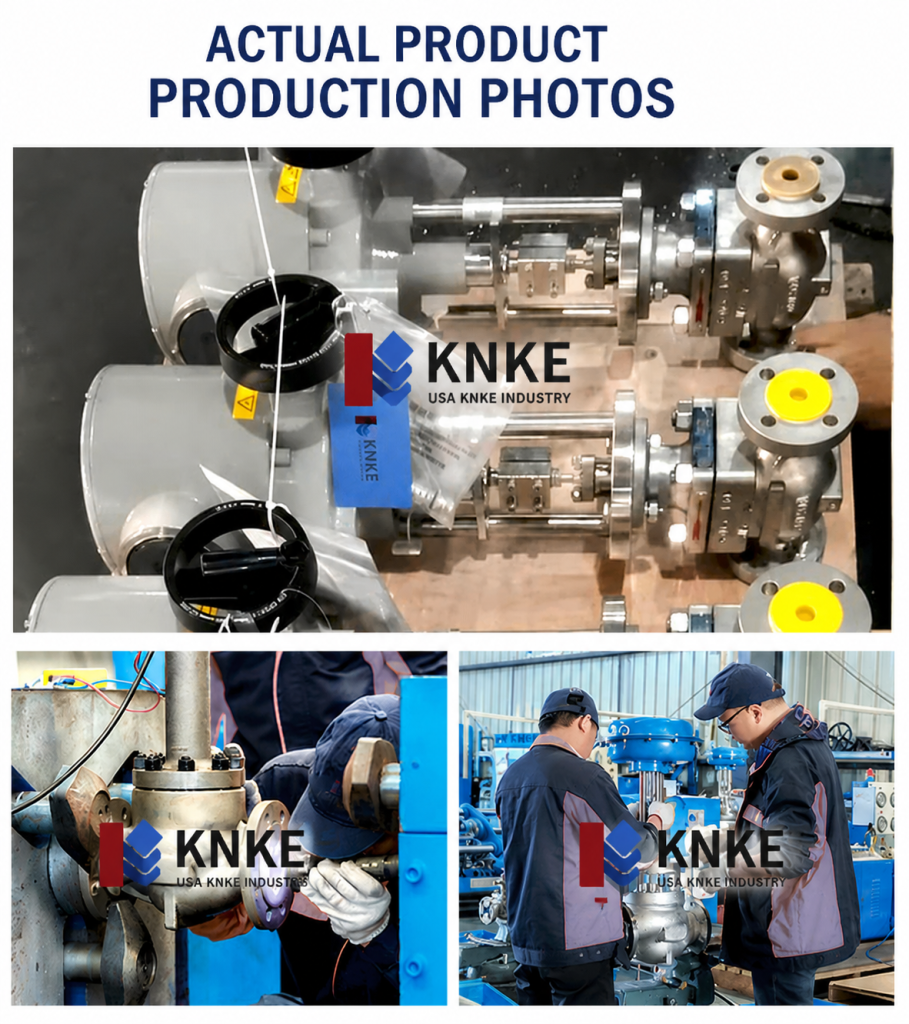
KNKE configures imported valves according to different industrial conditions. The company provides different options for valve body materials, sealing materials, and actuator types.
For industrial users, quality evaluation should focus on technical information and application suitability rather than simple promotional descriptions.
A reliable product solution depends on whether the valve can match the actual working environment.
Imported Valve Pricing Depends on Configuration Requirements
Many buyers ask about imported valve prices before discussing technical details.
However, industrial valve costs depend on multiple factors. The final price is usually related to product structure, material selection, control method, and application requirements.
Imported ball valves with the same size may have different prices when they use different operating methods, such as manual control or automatic control.
The material requirements of butterfly valves can also change according to the transported medium and working environment.
Pressure rating is another important factor. Different sealing structures and internal designs can influence the final product configuration.
An industrial valve project may also include actuators, control accessories, connection methods, and technical documents.
Therefore, suppliers need to understand the complete application conditions before confirming a quotation.
KNKE develops solutions according to actual operating requirements instead of recommending products only by product name or size.
For industrial buyers, clear technical parameters are more valuable than simple price comparisons. A suitable configuration can help reduce problems during later installation and operation.
Imported Valve Delivery Relies on Early Technical Communication
Delivery schedules are an important concern in industrial projects.
Many delays happen because technical information is not fully confirmed during the early communication stage.
Common issues include:
The valve model has not been clearly confirmed.
The pressure level does not match the actual working condition.
The actuator type is selected too late.
The installation size does not fit the site requirements.
These situations can affect purchasing plans and installation progress.
A professional imported valve manufacturer should communicate with users before production begins. Early confirmation of technical parameters can reduce unnecessary changes and improve project coordination.
KNKE provides technical consultation for fluid control systems. The team helps users confirm specifications, clarify product configurations, and reduce communication difficulties during procurement.
Through proper technical communication, users can better understand product requirements before making purchasing decisions.
Imported Valve Manufacturer Service Supports Long-Term Operation
For industrial equipment, purchasing the product is only the beginning of the application process.
After installation, users may still need support with equipment commissioning, parameter adjustment, spare parts replacement, and maintenance guidance.
A professional imported valve manufacturer should provide both products and technical assistance.
USA KNKE INDUSTRY provides fluid control solutions involving valves, flow meters, pumps, and actuators. These products support applications in chemical processing, environmental protection, water treatment, energy, and pharmaceutical industries.
In practical industrial applications, suitable valve selection, complete technical documents, and continuous application support can help companies manage equipment more effectively.
The value of a valve supplier is not only reflected in the product itself. Technical communication, application experience, and service support are also important parts of the overall solution.
Conclusion
Choosing imported valves is essentially a process of matching products with industrial systems.
A suitable valve solution requires comprehensive consideration of manufacturer capability, product type, technical parameters, delivery planning, and service support.
USA KNKE INDUSTRY focuses on fluid control solutions and provides imported valves and related products for industrial applications.
As an imported valve manufacturer, KNKE helps industrial users address common challenges such as difficult valve selection, unclear configurations, and insufficient technical support through technical analysis and application experience.
Choosing an imported valve means choosing more than a single product. It means selecting a fluid control solution that matches actual operating conditions and project requirements.