
Imported Ultrasonic Flow Meter | USA KNKE Guide
What Is an Imported Ultrasonic Flow Meter?
An imported ultrasonic flow meter measures liquid flow by using ultrasonic signals. The meter sends signals through the pipe and reads changes in signal travel time. It then uses this information to calculate the flow rate.
This method works well for many industrial liquid applications. For example, users can consider an imported ultrasonic flow meter for circulating water, cooling water, process water, and other liquid pipelines.
However, choosing a flow meter requires more than checking the pipe size. The actual working conditions also matter.
Before selecting an imported ultrasonic flow meter, users should check:
- Pipe diameter
- Pipe material
- Pipe wall thickness
- Liquid type
- Liquid temperature
- Operating pressure
- Normal flow range
- Installation space
- Output signal requirements
These details help users select a suitable configuration and reduce problems during installation.
Imported Ultrasonic Flow Meter for Circulating Water
Circulating water systems often use long pipelines and several branch lines. Operators may need to monitor the main flow, branch flow, and return flow.
An imported ultrasonic flow meter can provide an external measurement option when the pipeline conditions allow it. The sensor can mount on the outside of the pipe, so the measuring element does not need to sit inside the liquid flow.
This approach can help in several ways.
First, it can reduce pipeline work.
A conventional inline meter may require pipe cutting, welding, drainage, and pressure testing. An external ultrasonic flow meter can reduce these steps when the site supports external installation.
Second, it can support existing pipeline upgrades.
Many industrial pipelines already have supports, insulation, or protective coatings. Adding a new measurement point can become difficult if the plant needs to modify the pipe.
In this situation, an imported ultrasonic flow meter can provide another option. The installation team can check the pipe condition and select a suitable sensor position.
Third, it can support several monitoring points.
Operators can install meters on different sections of a circulating water network. Main-line data can show overall flow. Branch-line data can show changes in different process areas. Return-line data can also help operators understand the circulation condition.
As a result, the flow meter can become part of a wider plant monitoring system.
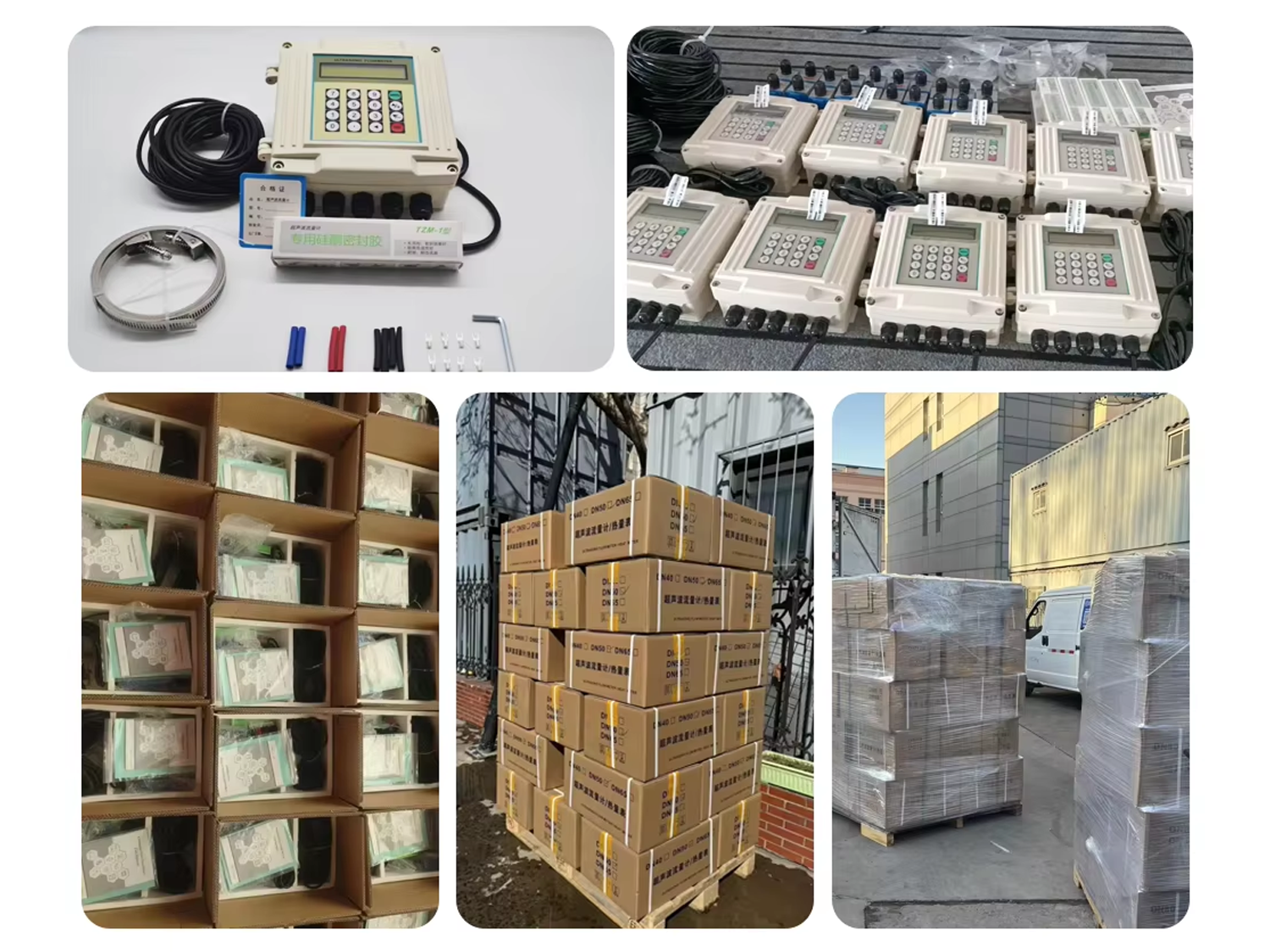
How to Choose an Imported Ultrasonic Flow Meter
Good selection starts with complete technical information. The following parameters deserve attention.
Pipe Diameter
First, confirm the actual pipe diameter. Different pipe sizes require different sensor settings and installation positions.
Users should provide the actual pipe size rather than rely on visual estimates.
Pipe Material
Pipe material also affects ultrasonic signal transmission.
Carbon steel, stainless steel, cast iron, and plastic pipes can have different signal conditions. Therefore, the supplier should know the actual pipe material before confirming the configuration.
Pipe Wall Thickness
Wall thickness also affects ultrasonic signal transmission.
Two pipes may have the same nominal diameter but different wall thicknesses. For this reason, users should provide the actual wall thickness whenever possible.
Liquid Temperature
Temperature is another important factor.
Normal-temperature water and higher-temperature liquids may require different sensor configurations. Users should provide both the normal operating temperature and any expected temperature changes.
Operating Pressure
Operating pressure helps describe the pipeline working condition.
Although external ultrasonic sensors normally do not contact the liquid, the pressure remains useful information for the overall project assessment.
Flow Range
The normal flow range is more useful than a single theoretical maximum value.
Users should provide the normal operating flow and, where possible, the expected minimum and maximum flow. This information helps match the measuring range with the actual process.
Installation Location
Installation location can directly affect measurement conditions.
Pumps, valves, elbows, and tees can change the flow pattern. Therefore, the installation team should check the available straight pipe section before installing an imported ultrasonic flow meter.
The outer pipe surface also needs attention. Thick insulation, rust, paint, or other surface conditions may affect sensor coupling. The installation area may need preparation before installation.
Imported Ultrasonic Flow Meter for Existing Pipeline Upgrades
Industrial plants often need additional flow measurement after the pipeline has already entered service.
For example, a process water line may already have fixed supports and insulation. The plant now needs a new flow monitoring point but wants to avoid major changes to the existing pipe.
In this situation, an imported ultrasonic flow meter can provide an external measurement option when site conditions support it.
The project can follow a simple process:
Check the pipe → Confirm the liquid → Check temperature and pressure → Select the installation point → Install the sensors → Check the signal → Connect the output.
The installation point needs special attention.
If the sensor sits too close to a pump outlet, elbow, or valve, the flow may not have a stable profile. Therefore, installers should choose a suitable straight pipe section whenever possible.
Insulated pipes may need additional preparation. The installer may need to remove or adjust part of the insulation around the sensor position.
The pipe surface should also remain clean and suitable for sensor coupling.
These steps help the imported ultrasonic flow meter work under suitable installation conditions.
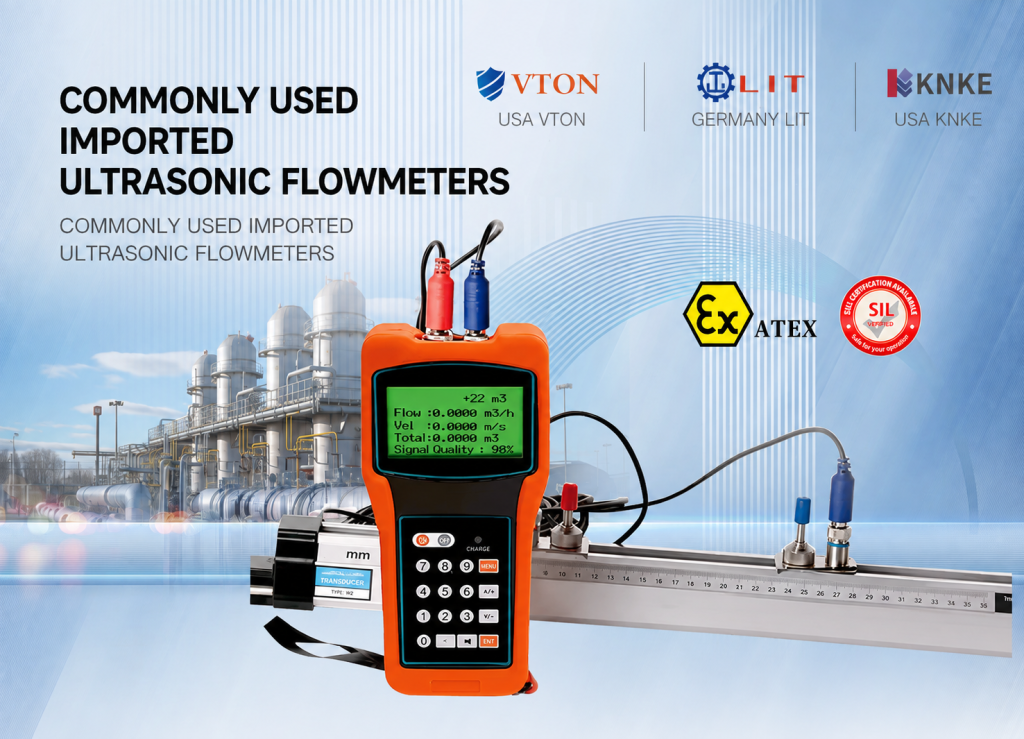
USA KNKE Support for Imported Ultrasonic Flow Meter Applications
USA KNKE INDUSTRY INC. is headquartered in Colorado, USA. The company provides fluid control products such as valves, flow meters, pumps, and actuators.
KNKE Industrial (Shenzhen) Co., Ltd. is the wholly owned holding company established in China by USA KNKE INDUSTRY INC. It supports sales and services in the Asia-Pacific market.
For an imported ultrasonic flow meter project, KNKE focuses on the relationship between product selection and actual working conditions.
For model selection, the team can review pipe size, pipe material, wall thickness, liquid type, temperature, pressure, flow range, and installation conditions.
For measurement stability, the team considers both the instrument and the installation environment. Sensor position, pipe surface, coupling, and signal quality can all affect the measurement.
For project coordination, complete technical information at the start can reduce repeated communication and specification changes.
For service and troubleshooting, technicians can check the system step by step. They can review the pipe data, liquid condition, sensor position, coupling, signal connection, and instrument settings before deciding whether the instrument itself needs attention.
This process helps users find the actual cause of a measurement issue.
Using Flow Data for Process Management
An imported ultrasonic flow meter does more than show the current flow value. When users connect the meter to a control or data collection system, the flow data can support daily process management.
For example:
Instantaneous flow shows the current flow condition.
Total flow supports water-use and process statistics over a selected period.
Flow trends help operators see changes in production load and pipeline operation.
Multi-point flow data helps compare the main pipeline with branch lines.
Unusual flow changes can remind operators to check pumps, valves, pipelines, or process conditions.
Therefore, an imported ultrasonic flow meter can become part of a broader industrial monitoring system.
For industrial users, the key question is not simply whether a flow meter has many functions. Instead, users should check whether the meter matches the pipe, liquid, operating conditions, installation space, and control system.
A suitable imported ultrasonic flow meter should meet several basic requirements:
- The measurement method should match the liquid.
- The sensor should match the pipe.
- The installation point should provide suitable flow conditions.
- The output should work with the existing control system.
- Maintenance and troubleshooting should follow clear steps.
When these conditions match the actual site, an imported ultrasonic flow meter can provide a practical way to add flow monitoring while reducing changes to an existing pipeline.
USA KNKE provides valves, flow meters, pumps, actuators, and other fluid control products for industrial applications. For circulating water, process water, cooling water, and existing pipeline upgrades, USA KNKE can provide an imported ultrasonic flow meter solution based on the actual pipe and process conditions.