
Application Scenarios of Pneumatic Butterfly Valves: Key Industries, Advantages, and Selection Guidelines
Pneumatic butterfly valves have become one of the most widely used flow control components in modern industrial automation. With advantages such as simple structure, fast response, high automation compatibility, and suitability for large-diameter pipelines, they are widely applied in the transportation and regulation of liquids, gases, and media containing solid particles.
This article focuses on the application scenarios of pneumatic butterfly valves, summarizing their core characteristics, typical industries, and selection considerations to help engineers and procurement specialists make informed decisions.
1. Features and Advantages of Pneumatic Butterfly Valves
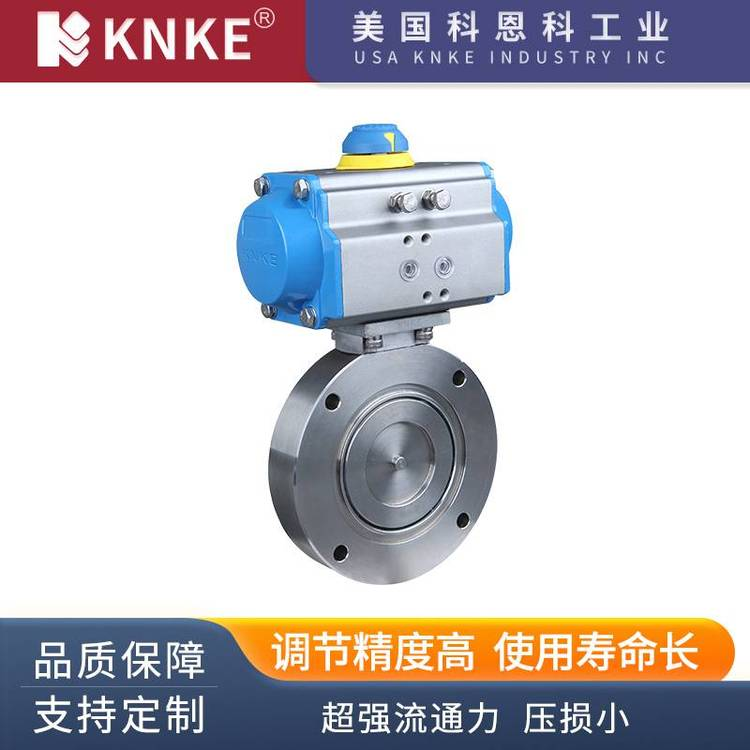
A pneumatic butterfly valve consists of a butterfly valve body and an air-driven actuator. By using compressed air as the power source, the valve disc opens or closes quickly, achieving flow shutoff or regulation with high reliability. Key advantages include:
- Fast operation, typically completing opening or closing within one second
- High torque output and quick response for precise control
- Lightweight design and easy maintenance
- Ideal for large-diameter, low- and medium-pressure pipelines
- Can be equipped with a positioner for accurate flow regulation
These advantages make pneumatic butterfly valves a common choice in modern automated systems.
2. Application Scenarios of Pneumatic Butterfly Valves
Below are the most typical and representative application scenarios of pneumatic butterfly valves across various industries.
1. Water Treatment and Environmental Engineering
- Raw water transmission
- Aeration systems in wastewater treatment
- Dosing pipelines
- Reclaimed water distribution systems
The fast response and stable operation of pneumatic butterfly valves make them ideal for municipal water and large-scale treatment plants.
2. HVAC and Building Utility Systems
- Chilled water and cooling water circulation
- Air duct airflow regulation
- District heating and floor heating valve control
Their lightweight structure and large-diameter suitability make them widely used in commercial buildings, factories, and public facilities.
3. Petrochemical and Chemical Processing
- Process medium flow control
- Gas and steam pipeline shutoff
- Acidic or alkaline fluid regulation
By selecting compatible sealing materials and valve body options, pneumatic butterfly valves can handle a wide range of chemical media.
4. Food and Pharmaceutical Industries
- Process water and purified water
- Medium-viscosity liquid transfer
- Automated production line interlocks
Since pneumatic actuation produces no sparks, it is highly suitable for hygiene-sensitive and safety-critical environments.
5. Power Generation and Energy Industries
- Cooling water circulation
- Boiler auxiliary systems
- Flue gas, desulfurization, and denitrification systems
The low-resistance flow path reduces energy consumption and is ideal for high-volume fluid applications.
6. Metallurgy, Mining, and Bulk Material Handling
- Dust removal systems
- Pneumatic conveying pipelines
- Mixed fluid and particulate-containing media regulation
High-performance butterfly valves can be selected for high-temperature or abrasive operating conditions.
7. Food Processing and Light Industry
- Beverage and beer production lines
- CIP cleaning systems
- Cleaning solution and disinfectant transfer
Their compact design minimizes dead zones, easing cleaning and sanitation requirements.
3. Overall Advantages Across Application Scenarios
In all industry scenarios, pneumatic butterfly valves deliver consistent key benefits:
- Suitable for water, air, steam, oils, and weak corrosive fluids
- Excellent cost advantage in large-diameter applications
- Allows full automation through DCS or PLC system integration
- Easy maintenance and minimal downtime
4. Selection Guidelines for Pneumatic Butterfly Valves
To ensure stable operation, consider the following when selecting a pneumatic butterfly valve:
1. Material Selection
- Water systems: carbon steel or stainless steel with EPDM sealing
- Chemical media: stainless steel with PTFE sealing
- High-temperature applications: metal-seated structures
2. Sealing Structure
- Standard applications: centric butterfly valve
- High-temperature or high-pressure: double-offset or triple-offset butterfly valve
3. Actuator Type
- Single-acting: automatic return for enhanced safety
- Double-acting: higher torque output for frequent operation
4. Control Mode
- On–off control for simple open/close functions
- Modulating control with a positioner for precise 4–20 mA regulation
5. Development Trends in Pneumatic Butterfly Valve Applications
With the rise of industrial automation, pneumatic butterfly valves are evolving toward:
- More intelligent digital positioners and communication protocols
- Longer-life, corrosion-resistant sealing materials
- Lightweight yet stronger valve body designs
- Advanced performance for extreme or corrosive environments
The application scenarios of pneumatic butterfly valves span nearly all industrial sectors, including water treatment, chemical processing, power generation, food production, HVAC systems, and more. Thanks to their quick response, broad media compatibility, and high automation capability, pneumatic butterfly valves have become essential components in modern flow control systems.