
Ultrasonic BTU Meter Selection: KNKE Case
Choosing the right ultrasonic BTU meter plays an important role in chilled water system upgrades and energy measurement projects. Buyers need to consider more than flow measurement. They should also check water temperature, pipe size, installation conditions, and signal outputs.
For projects that require clamp-on flow measurement, local display, and remote data transmission, the American KNKE ultrasonic BTU meter is an option worth considering.
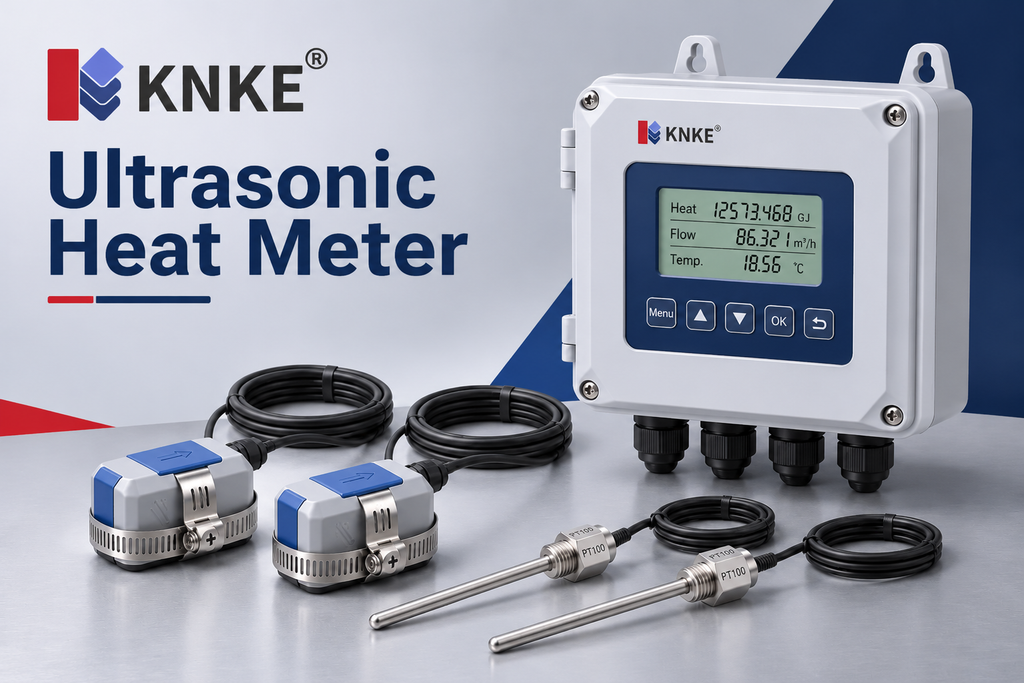
Wuxi Zengying Electromechanical Technology Co., Ltd. selected two types of clamp-on flow transducers for an actual project. Each model covers a different pipe size range. The system also includes PT100 temperature sensors, a wall-mounted main unit, and communication outputs. This case explains how to select the right configuration for different site conditions.
1. How to Choose a Brand for an Ultrasonic BTU Meter?
First, define what you need to measure. Some projects only require flow measurement. Others need to calculate cooling or heating energy.
For chilled water systems, the meter must work with both flow and temperature measurements. The main unit must also support energy calculations.
When comparing brands, provide the supplier with the following information:
- Pipe diameter and outside diameter
- Pipe material and wall thickness
- Water temperature range
- Expected flow rate
- Available installation space
For existing pipeline upgrades, check where technicians can install clamp-on flow sensors. Also check whether the pipelines have temperature measurement ports.
These details help suppliers recommend a suitable ultrasonic BTU meter for your application.
2. Does the KNKE Ultrasonic BTU Meter Have Real Project Experience?
Yes. Wuxi Zengying Electromechanical Technology Co., Ltd. selected the KNKE ultrasonic BTU meter for a chilled water measurement project.
The system measures chilled water at temperatures from 8°C to 20°C. It uses a split-type design. Technicians install the main unit on a wall for easy access and operation.
The main unit displays flow and temperature data. It also provides 4–20 mA and RS485 outputs for external systems.
The project uses two types of clamp-on flow transducers:
- TM-1 Medium Transducer: Suitable for pipe sizes from DN50 to DN700.
- TS-1 Small Transducer: Suitable for pipe sizes from DN15 to DN100.
Both models work with insertion-type PT100 temperature sensors. The project specifies a sensor insertion length of 150 mm.
3. Why Does the Project Use Two Types of Clamp-On Sensors?
Different pipelines need different sensor configurations. The two transducer models cover different pipe size ranges.
The TM-1 supports larger pipes, with a maximum diameter of DN700. The TS-1 covers smaller pipes, starting from DN15.
Their measurement ranges overlap between DN50 and DN100. For pipes in this range, check the actual outside diameter, wall thickness, and installation space before choosing a sensor.
Insulated chilled water pipes also need extra attention. Make sure the sensor has enough installation space. Plan how to restore the insulation after installation.
This approach helps technicians select the right transducer for each measurement point.
4. Does an Ultrasonic BTU Meter Need Pipeline Modifications?
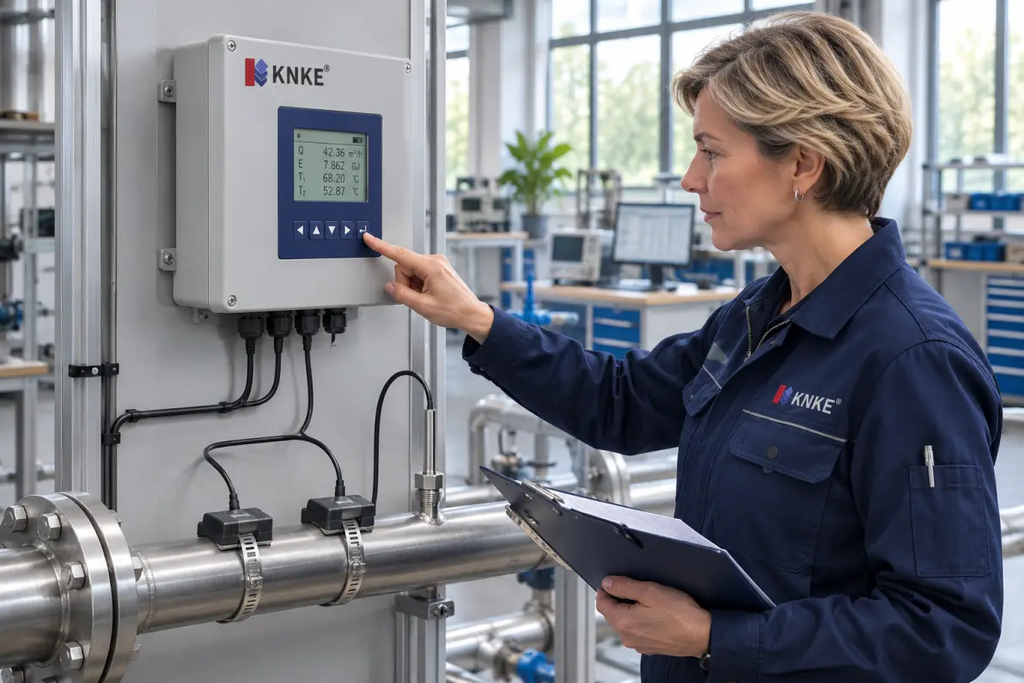
Clamp-on flow sensors attach to the outside wall of a pipe. Technicians do not need to drill holes through the pipe to install these sensors.
However, this project uses insertion-type PT100 sensors for temperature measurement. The installation team must check whether the existing pipelines have suitable temperature ports.
Before requesting a quotation, prepare the following information:
- Supply and return water pipeline drawings
- Photos of existing temperature ports
- Connection dimensions
- Available sensor insertion depth
If the pipeline already has temperature sensor wells, check their dimensions and insertion depth.
The 150 mm insertion length in this project reflects the customer’s specific requirements. Other projects may need different dimensions. Always check the actual pipe structure and installation conditions.
5. How to Compare KNKE Ultrasonic BTU Meter Prices?
Compare quotations based on the complete measurement system rather than the main unit alone.
Check whether the quotation includes:
- Wall-mounted main unit
- Clamp-on flow transducers
- PT100 temperature sensors
- Connection cables
- Installation accessories
Also confirm who will handle commissioning and communication setup.
If the meter connects to a building automation system, check the 4–20 mA output settings. Confirm which measurement values the output supports.
For the RS485 interface, ask about the communication protocol and available data registers. Make sure the control system can read the required values.
Clear technical requirements help purchasing and automation teams check the equipment more easily.
6. What Information Do Suppliers Need for Ultrasonic BTU Meter Selection?
Good technical information helps suppliers prepare accurate quotations. For each measurement point, provide these details:
- Nominal pipe diameter
- Actual outside diameter
- Pipe wall thickness
- Pipe material
- Inner lining, if applicable
- Water temperature
- Expected flow rate range
You should also list the data you need to monitor. Common examples include instantaneous flow rate, supply water temperature, return water temperature, instantaneous cooling capacity, and total cooling energy.
When contacting KNKE, also provide the main unit location and the distance between the sensors and the main unit.
If you plan to connect the meter to a control system, explain the required communication interface. For existing equipment upgrades, pipeline photos, nameplate information, and wiring diagrams can also help.
These details make ultrasonic BTU meter selection easier and help avoid unnecessary changes during installation.
7. Which Projects Can Use a KNKE Ultrasonic BTU Meter?
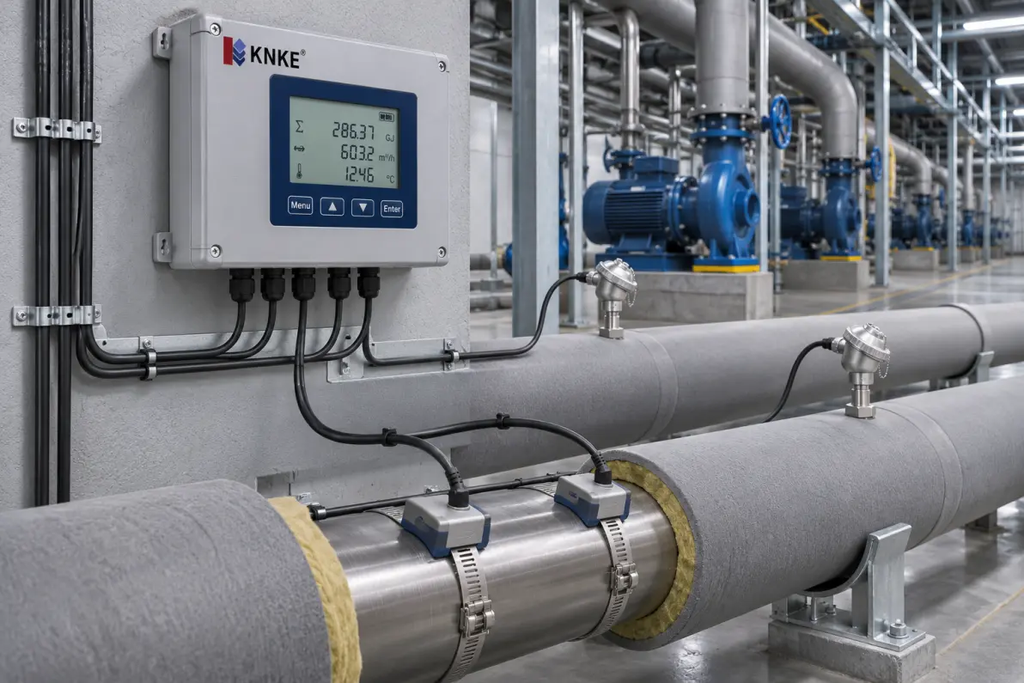
The KNKE ultrasonic BTU meter can suit several types of chilled water applications.
For example, consider it when a project needs to:
- Add energy measurement points to existing chilled water pipes.
- Measure flow in pipelines with different diameters.
- Install clamp-on sensors without cutting the main pipeline.
- Display flow and temperature data on site.
- Send measurement data to a building automation or control system.
The project from Wuxi Zengying Electromechanical Technology Co., Ltd. shows how two transducer models can cover different pipe sizes.
Projects with similar conditions can use this case as a reference. Check each measurement point separately. Confirm the pipe dimensions, temperature connections, and data requirements before selecting the final model.
With the right technical information, buyers can choose a suitable KNKE ultrasonic BTU meter configuration for their chilled water systems.