
KNKE Water Solenoid Valve: Selection Guide and Customer Case
A KNKE water solenoid valve is worth considering for ambient-temperature purified water systems requiring flanged connections and normally closed operation. Choose the model according to operating pressure, power supply, and installation requirements.
A DN100 valve order from Xiamen Yujingtai Construction Engineering Co., Ltd. provides a practical configuration reference. This guide explains the project requirements and answers common purchasing questions.
1. How Do You Select a KNKE Water Solenoid Valve?
Start with the fluid, temperature, operating pressure, and control function. Then confirm the connection type, power supply, and installation dimensions.
Different water applications may require different seals and valve designs. For example, purified water and circulating water containing particles present different operating conditions. Therefore, provide a complete fluid description when requesting a quotation.
Also supply the upstream and downstream pressures. These values help the supplier assess the operating pressure differential and recommend a suitable model.
2. What Does the KNKE Water Solenoid Valve Customer Case Include?
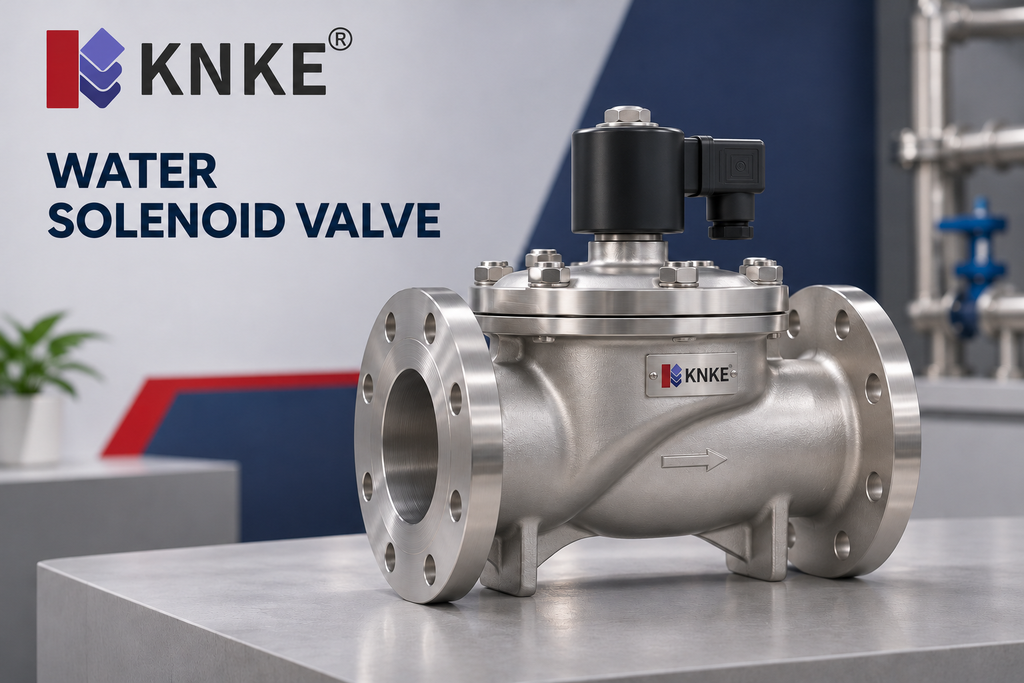
Xiamen Yujingtai Construction Engineering Co., Ltd. ordered a KNKE DN100 solenoid valve for on/off control of purified water at ambient temperature.
The project specified a PN16 pressure rating and an actual operating pressure not exceeding 1.0 MPa. It also required a 220 VAC power supply and normally closed operation.
The configuration included an SS304 stainless steel body, flanged connections, and a non-explosion-proof electrical configuration.
These requirements covered the fluid conditions, body material, electrical supply, and control function. As a result, the order provides a useful reference for preparing inquiries for similar applications.
3. Which Project Details Should Buyers Check?
First, distinguish the pressure rating from the actual operating pressure. This project listed both PN16 and a maximum operating pressure of 1.0 MPa. Ask the supplier to confirm the selected model’s operating limits under the specified conditions.
Second, check the control logic. The normally closed function must match the required energized and de-energized valve states.
Third, verify each installation requirement separately. Supply voltage, flange dimensions, body material, and available space all need confirmation. A nominal size alone does not define the complete valve configuration.
Finally, review the electrical protection requirements. This order specified a non-explosion-proof configuration. Other installation environments may require a different model and supporting documentation.
4. How Should You Compare Prices and Value?
Compare quotations against the same specification. Otherwise, differences in materials, seals, electrical configuration, or accessories can make prices difficult to assess.
For this project, the key requirements included DN100 size, an SS304 body, flanged connections, normally closed operation, and 220 VAC power.
In addition, ask whether the quotation includes mating flanges, fasteners, and installation accessories. Confirm the inspection documents and delivery scope as well.
A detailed KNKE water solenoid valve quotation helps buyers understand what the price covers. It also supports a clearer comparison of purchasing and installation costs.
5. What Information Helps Suppliers Quote Efficiently?
Provide the fluid name, operating temperature, upstream pressure, downstream pressure, nominal size, connection type, supply voltage, and control function.
Also describe the operating cycle. Frequent switching, extended energized periods, and restricted installation space can affect selection.
For replacement projects, include photographs of the existing valve nameplate and the installation dimensions. These details help the supplier check compatibility.
Then request a written proposal covering the model, materials, seals, dimensions, delivery schedule, and accompanying documents. Complete information can reduce repeated technical questions.
6. How Do You Confirm Quality Assurance and Support?
Before purchasing, confirm the inspection requirements, supplied documents, warranty duration, and warranty coverage. Ask for the service contact details and repair procedure too.
Next, review the installation instructions. Check flow direction, permitted mounting orientation, pipeline cleanliness requirements, and electrical connections.
The customer case establishes the ordered configuration. However, assessing long-term performance requires operating records. Likewise, service records provide evidence of after-sales response.
Use the technical proposal, project information, and written service terms together when evaluating the supplier.
7. Which Applications Can Consider This Configuration?
Projects involving ambient-temperature purified water, flanged connections, and normally closed control can consider KNKE during supplier evaluation. The stainless steel body requirement should also match the application.
The Xiamen Yujingtai DN100 order provides a reference for organizing these requirements. Nevertheless, each project needs confirmation of its own pressure conditions, electrical supply, and installation details.
A suitable KNKE water solenoid valve should match the actual operating conditions and control logic. Clear specifications and an agreed scope of supply give buyers a practical basis for their purchasing decision.