
High-Temperature Concentration Meter: U.S.KNKE Project Case
An environmental technology company selected a U.S.KNKE high-temperature concentration meter for sodium hydroxide monitoring in August 2026. The order specified nickel wetted parts, a DN50 flange connection, a 150 mm installation length, and a 4–20 mA output.
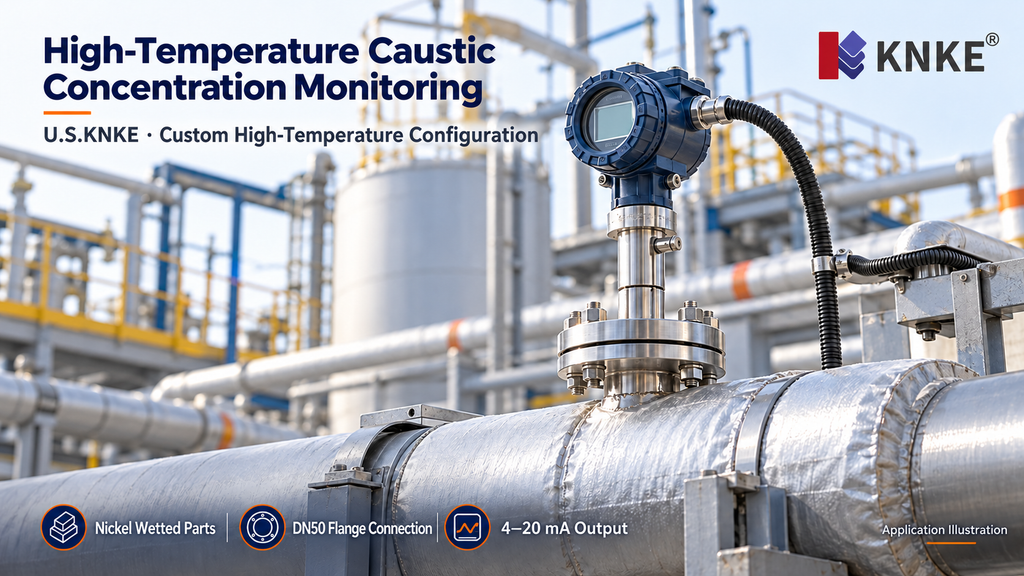
Project Requirements for a High-Temperature Concentration Meter
The customer provided two operating conditions:
- 50% sodium hydroxide concentration at 160°C
- 70% sodium hydroxide concentration at 135°C
Both conditions required a review of material suitability and measurement requirements. In addition, the meter needed to fit the process connection and send readings to the control system.
However, these figures describe two separate operating conditions. They do not establish suitability for 70% concentration at 160°C. Therefore, similar projects should check each concentration and temperature pair separately.
The customer also specified the installation length. As a result, size formed an important part of the selection criteria, alongside materials and signal output.
High-Temperature Concentration Meter Configuration
The U.S.KNKE project configuration included:
- Nickel wetted parts to meet the stated material requirement.
- A DN50 flange connection for the process interface.
- A 150 mm installation length to meet the size requirement.
- A 4–20 mA output for sending concentration readings to the control system.
Together, these details defined the main material, connection, size, and signal requirements.
However, another sodium hydroxide application may need a different setup. For example, changes in impurities, temperature, or concentration can affect material suitability. Therefore, customers should confirm the full process conditions before choosing the same configuration.
Installation and Signal Connection
The package did not include a pipe tee. Therefore, the project needed a separate arrangement for this fitting.
Before installation, the team should check the flange standard, seals, and mounting direction. In addition, the layout should leave enough space for wiring, inspection, and maintenance.
The 4–20 mA output also needs clear settings. For example, the meter and control system should use matching concentration ranges. Otherwise, the control system may display a value that does not match the meter reading.
Finally, the installation team should check the power supply and wiring against the agreed technical documents.
Selection Advice for Similar Projects
This case offers a U.S.KNKE configuration reference for high-temperature sodium hydroxide monitoring. Specifically, it links two stated operating conditions with nickel wetted parts, a defined installation size, and remote signal output.
For a similar project, first provide the solution composition and concentration range. Next, confirm the normal and maximum temperatures, working pressure, and required measurement accuracy.
Also include the connection size, available space, power supply, and output requirements. These details help the supplier assess suitable models and define the scope of supply.
Finally, agree on calibration and acceptance criteria before placing an order. This step gives both parties a clear basis for checking the instrument.
Customers seeking a high-temperature concentration meter can consider U.S.KNKE for applications with specific material and installation needs. Share your process conditions with the KNKE team to discuss suitable models and custom configurations.