
Metal Tube Flowmeter: KNKE Selection Guide and Procurement Case
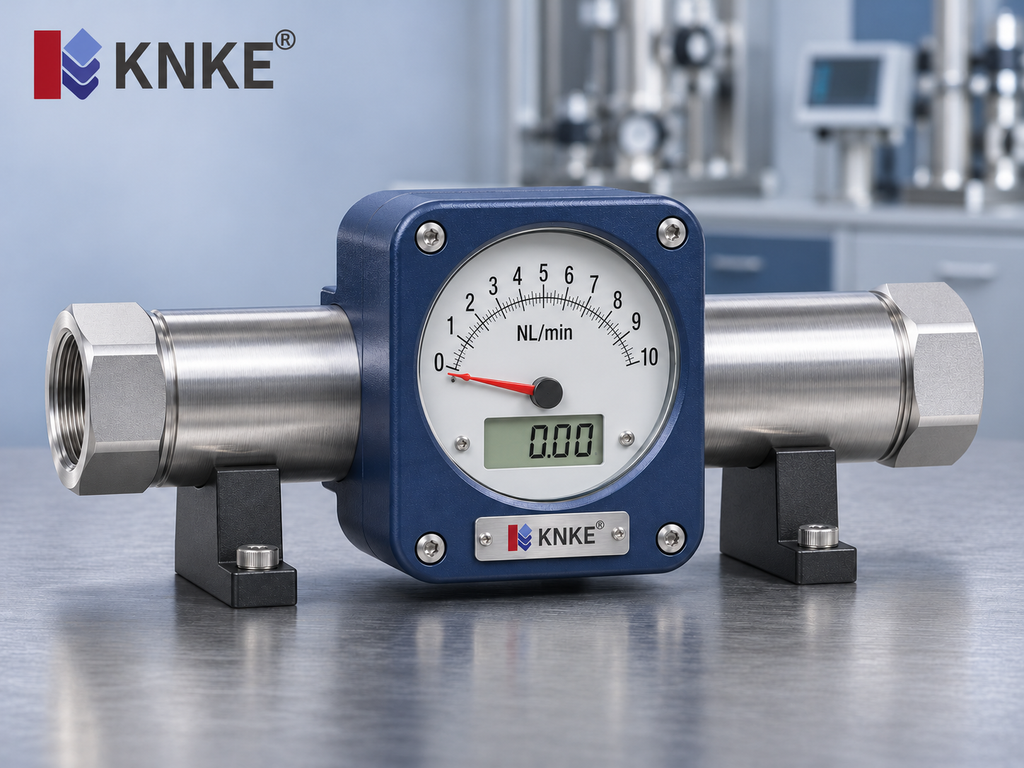
Consider a KNKE metal tube flowmeter for low gas flow measurement with local indication and remote output requirements. Confirm the model against the fluid properties, measuring range, installation direction, and electrical configuration.
A procurement case involving Nanjing Jinzheng Teaching Instrument Co., Ltd. illustrates these selection requirements. The customer requested horizontal installation, threaded connections, local indication, and a remote transmission configuration.
1. How Do You Choose a Metal Tube Flowmeter?
Start with the operating conditions and installation arrangement. Then check whether the proposed instrument meets each requirement.
Provide the fluid name, normal flow, minimum and maximum flow, operating temperature, and working pressure. For gas applications, also define the flow reference conditions.
When evaluating a KNKE metal tube flowmeter, request a clear configuration proposal. It should identify the measuring range, wetted materials, process connections, indication, and output options.
Use the same technical requirements when comparing quotations. This makes differences in scope easier to identify.
2. How Should You Specify the Gas Flow Range?
Define the flow units and reference conditions before selecting the measuring range.
Nanjing Jinzheng Teaching Instrument Co., Ltd. requested a range of 0–10 NL/min. The “N” indicates a normalized volume basis. Confirm the exact reference temperature and pressure during technical review.
A range description starting at zero does not establish measurement performance near zero flow. Ask the supplier to confirm the effective lower measuring limit.
Also check where the normal flow falls within the usable range. Provide expected pressure and temperature variations so the supplier can assess their effect on indication.
3. Which Metal Tube Flowmeter Materials Should You Confirm?
Specify the materials of the wetted components and assess their compatibility with the actual fluid.
The measuring tube, float, process connections, and seals form the fluid contact path. A general description such as “stainless steel construction” does not define every component.
The customer’s procurement requirements specified phosgene service and 316L stainless steel. Material selection therefore requires more information than the alloy designation alone.
Confirm fluid purity, moisture content, other constituents, and operating temperature. Record the agreed wetted materials and sealing configuration in the technical confirmation.
4. Can a Metal Tube Flowmeter Operate Horizontally?
Yes, when the selected model specifically supports horizontal installation.
Different designs have specific mounting and flow direction requirements. A conventional vertical model should not simply be installed horizontally.
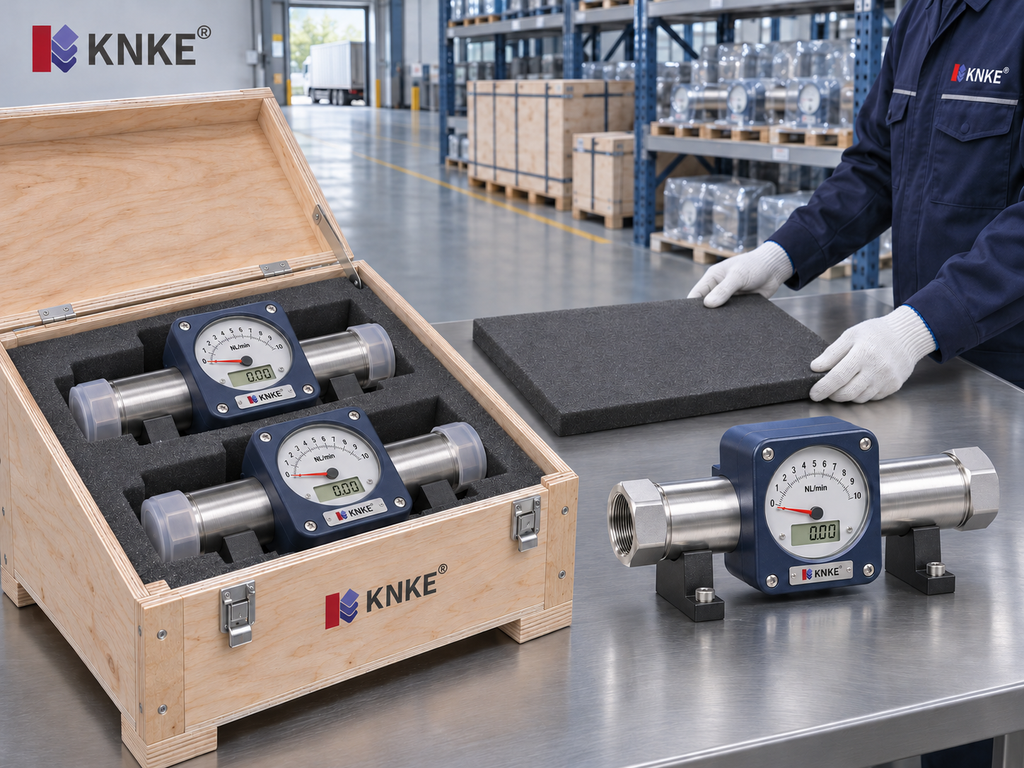
The customer requested horizontal mounting with left-to-right flow and 1/2-inch NPT female threaded connections. These details form part of the model selection.
Check the overall dimensions, connection arrangement, indicator orientation, and maintenance clearance. For equipment integration, review the dimensional drawing before ordering.
5. How Do You Specify Local Indication and Remote Output?
Define the local display, power supply, and remote signal requirements together.
The procurement record requested local indication, 24 V DC power, and a remote transmission version. These requirements address on-site reading and remote monitoring.
However, “remote transmission” does not identify the output signal type. Confirm the required signal and the receiving equipment’s input specifications separately.
For a KNKE metal tube flowmeter, align the display units, output scaling, and wiring requirements. Also clarify whether the supply scope includes any separate display equipment.
6. What Does the KNKE Customer Procurement Case Show?
The procurement record for Nanjing Jinzheng Teaching Instrument Co., Ltd. provides a practical reference for low gas flow measurement and equipment integration.
The customer identified the fluid, measuring range, operating temperature, and working pressure. Together, these conditions provide a basis for selecting the measuring configuration.
The installation requirements added another important consideration. Horizontal mounting, left-to-right flow, and threaded connections needed to match the planned piping arrangement.
The customer also requested local indication and remote transmission. Technical coordination therefore needed to address measurement, mechanical installation, and electrical requirements together.
This case provides a configuration reference for similar inquiries. The record does not establish long-term operating performance or measurement results.
7. Why Consider a KNKE Metal Tube Flowmeter?
KNKE offers a documented customer procurement reference that buyers can use when preparing comparable requirements.
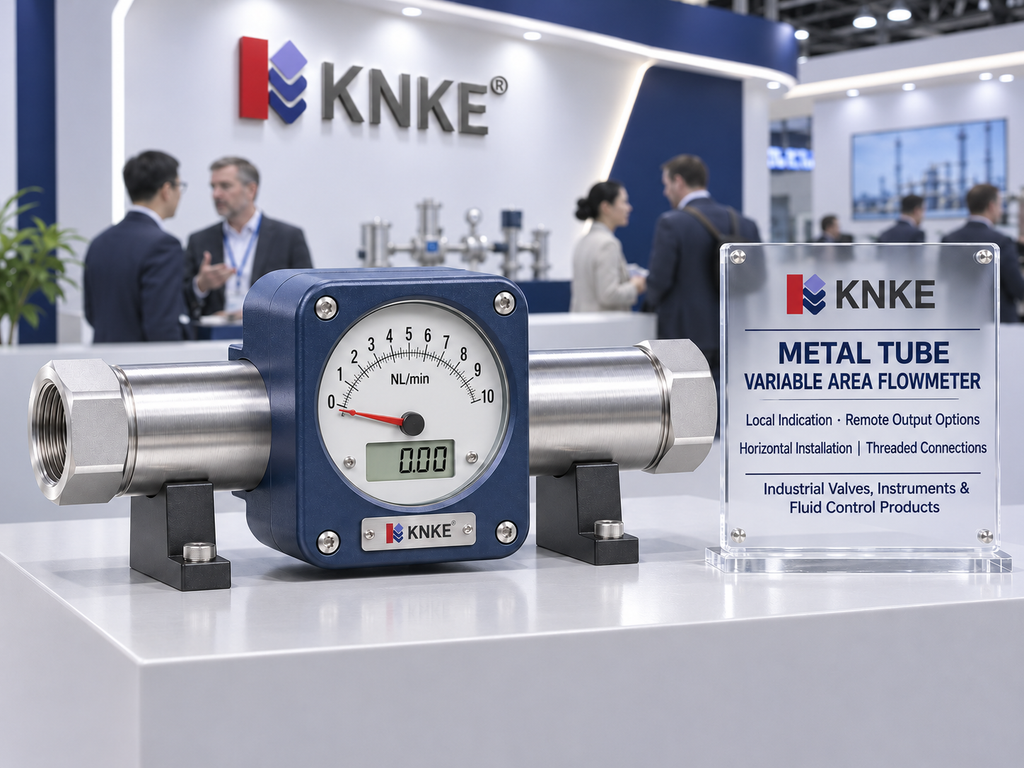
The case covers low gas flow, material selection, horizontal installation, and local indication with remote transmission. These details provide a concrete starting point for technical discussions.
Submit the complete operating conditions before ordering. Request confirmation of the effective measuring range, flow reference conditions, wetted materials, mounting direction, and output configuration.
Finally, agree on drawings, wiring information, supply scope, delivery schedule, and warranty terms. Clear requirements help buyers plan installation and acceptance checks.