
Fluorine-Lined Control Valve: Is KNKE Reliable?
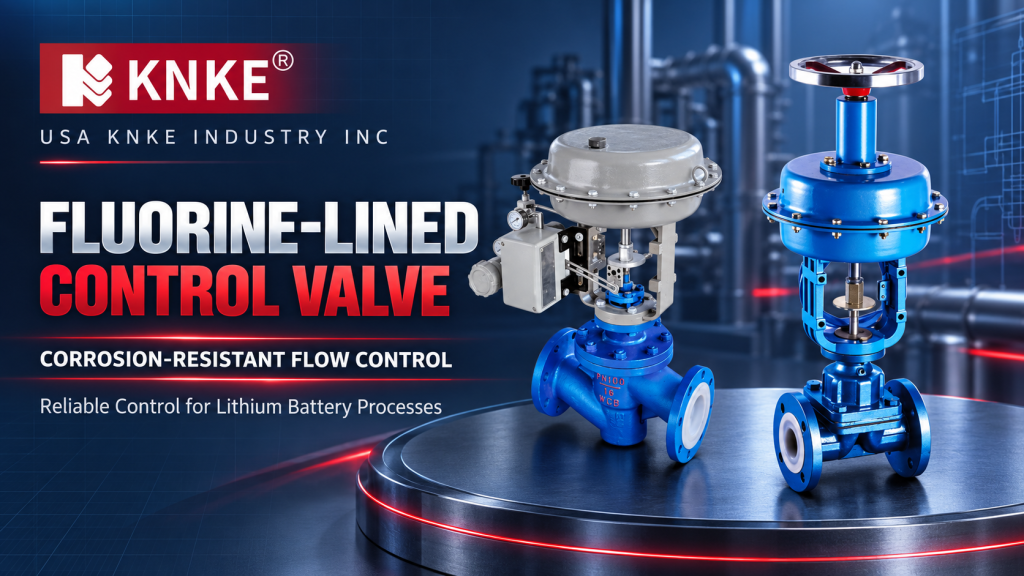
A fluorine-lined control valve helps regulate corrosive fluids in lithium battery material production. USA KNKE designs this valve for acids, alkalis, saline liquids, and selected chemical media. Its fluoropolymer lining separates the process fluid from the metal valve body. This structure supports flow control in lithium salts, cathode materials, and process liquid recovery systems.
Fluorine-Lined Control Valve in Lithium Processing
Lithium battery material production includes several wet processes. Plants use these processes to make lithium salts and cathode materials. Common fluids include acids, alkalis, additives, and saline mother liquor.
These fluids may corrode standard metal valves. Deposits may also affect the valve plug and seals. As a result, the valve may lose control stability.
The KNKE fluorine-lined control valve uses a fluoropolymer lining. The lining covers the main wetted flow areas. It separates the corrosive fluid from the metal pressure-retaining body.
A cathode material system may use the following design conditions:
- Medium temperature: ambient to about 80°C
- Pipeline design pressure: about 1.0 MPa
- Flow range: about 8–25 m³/h
- Control signal: 4–20 mA
- Medium: corrosive liquid with low solids content
The control system sends a signal to the valve positioner. The valve then changes its opening to regulate the feed rate. These figures only illustrate the selection process. Engineers must confirm the actual limits for each project.
Cathode Material Feed System
A lithium battery cathode material project plans an acid feed system. The system connects a storage unit with a reaction vessel. The corrosive liquid may experience moderate flow changes.
The design uses an imported fluorine-lined control valve. An electromagnetic flowmeter measures the liquid flow. The controller compares that value with the process setpoint.
The positioner receives a 4–20 mA signal. It directs the pneumatic actuator to move the valve. The design requires the valve to close if air pressure fails. This setting supports the planned process safety strategy.
The proposed operating data include:
- Normal flow: about 16 m³/h
- Upstream pressure: about 0.65 MPa
- Downstream pressure: about 0.40 MPa
- Differential pressure: about 0.25 MPa
- Normal valve opening: about 40%–70%
This opening range keeps some capacity available for flow changes. Engineers also check the minimum and maximum flow conditions. They review the lining, valve trim, and sealing materials.
The project remains in the technical review and quotation stage. Therefore, these figures describe design conditions. They do not represent operating results.
Valve Size and Control Performance
The USA KNKE imported fluorine-lined control valve has several main parts. These include the metal body, lining, valve trim, actuator, seals, and positioner.
The metal body contains the pipeline pressure. The fluoropolymer lining protects the main wetted surfaces. This structure can support the control of many corrosive liquids.
Engineers must still review each medium carefully. Acid concentration and temperature can affect the lining. Fine particles may cause wear or deposits. Crystals may restrict the valve flow passage.
Valve size also affects control quality. An oversized valve may stay near the closed position. A small signal change may then cause a large flow change.
An undersized valve creates different problems. It may increase fluid speed and pressure loss. It may also limit the required maximum flow.
Engineers calculate the required flow coefficient before choosing the valve size. They use the flow rate, pressure drop, and fluid density. They also check viscosity and vaporization risk.
For example, consider a water-like liquid at 16 m³/h. The available differential pressure reaches about 0.25 MPa. Engineers use these values to calculate the initial flow coefficient. They then add a suitable control margin.
Solutions for Common Project Problems
Lithium battery projects often face several valve selection problems. Customers may lack complete process data. Technical documents may also contain different configurations.
Delivery coordination and service can create further difficulties. KNKE Industrial (Shenzhen) Co., Ltd. supports USA KNKE customers across the Asia-Pacific market.
The technical team can review key operating data, including:
- Medium name and concentration
- Operating temperature
- Minimum, normal, and maximum flow
- Upstream and downstream pressure
- Pipeline connection standard
- Control signal
- Required failure position
- Solids and crystallization risk
This review helps the team select a suitable valve structure. It also reduces errors caused by pipeline-size selection alone.
KNKE can list the lining and trim materials in the technical documents. The documents can also state actuator and positioner details. This approach keeps the quotation and technical configuration consistent.
Project coordination can cover several stages. These stages include technical approval, production planning, document preparation, and shipment arrangements.
The actual schedule depends on the valve specification and quantity. Material selection can also affect the schedule. Therefore, the confirmed contract should define the delivery period.
For service support, engineers first collect basic fault information. They check the control signal, air pressure, and valve position. They can then inspect the actuator, positioner, seals, and valve trim.
KNKE Valve Selection for Lithium Battery Plants
USA KNKE INDUSTRY INC operates from Colorado, USA. The company supplies valves, flowmeters, pumps, actuators, and fluid-control solutions.
KNKE Industrial (Shenzhen) Co., Ltd. supports the Asia-Pacific market. The company handles regional sales and service work.
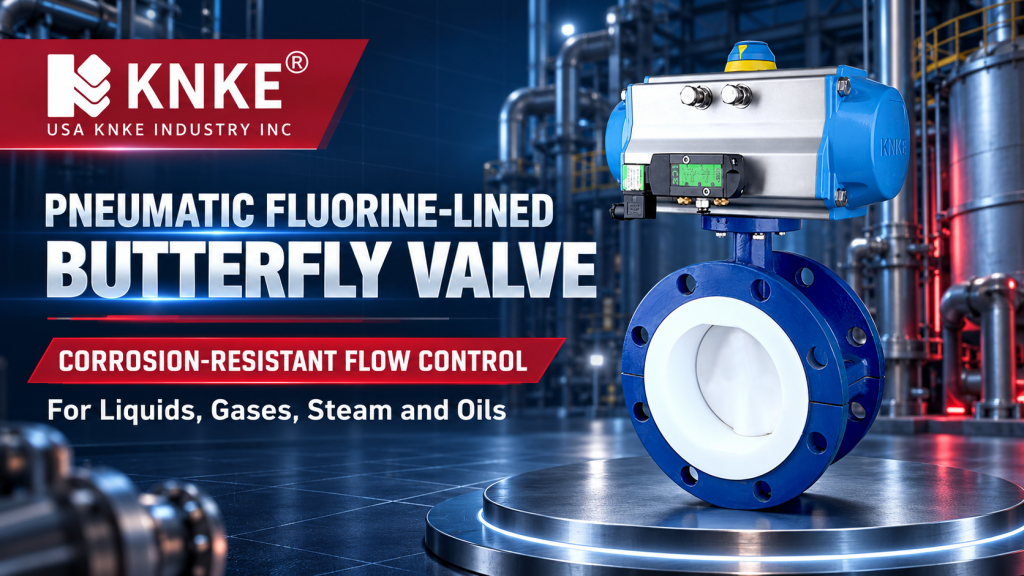
A KNKE imported fluorine-lined control valve can work with several types of equipment. These include electromagnetic flowmeters, mass flowmeters, pneumatic actuators, and chemical pumps.
This combined approach improves system matching. Engineers can check the medium, signal, pressure, and connection standard together.
Customers should provide three flow conditions before selection. These include minimum, normal, and maximum flow. They should also provide the fluid concentration and operating temperature.
A temperature of 80°C does not confirm lining compatibility by itself. Engineers must also check the chemical concentration and operating time. Fluid penetration and temperature changes may also affect material selection.
Early calculations can reduce valve sizing errors. Material checks can reduce compatibility risks. Proper actuator sizing can also improve control response.
The KNKE imported fluorine-lined control valve supports acid and mother liquor control in lithium battery plants. Careful selection remains essential for each process condition.