
Comprehensive Guide to Screw Pumps: The Core Equipment for High-Viscosity Fluid Transfer
In modern industrial fluid handling systems, screw pumps are widely used in petrochemical, food processing, pharmaceutical, wastewater treatment, paper, and building material industries due to their high efficiency, smooth operation, and excellent wear resistance. Compared with centrifugal and gear pumps, screw pumps offer unmatched performance when transferring high-viscosity, solid-containing, or shear-sensitive fluids.
This article provides a complete overview of screw pump working principles, structural types, performance characteristics, main applications, and key selection criteria to help industrial users make informed decisions.
1. Working Principle of a Screw Pump
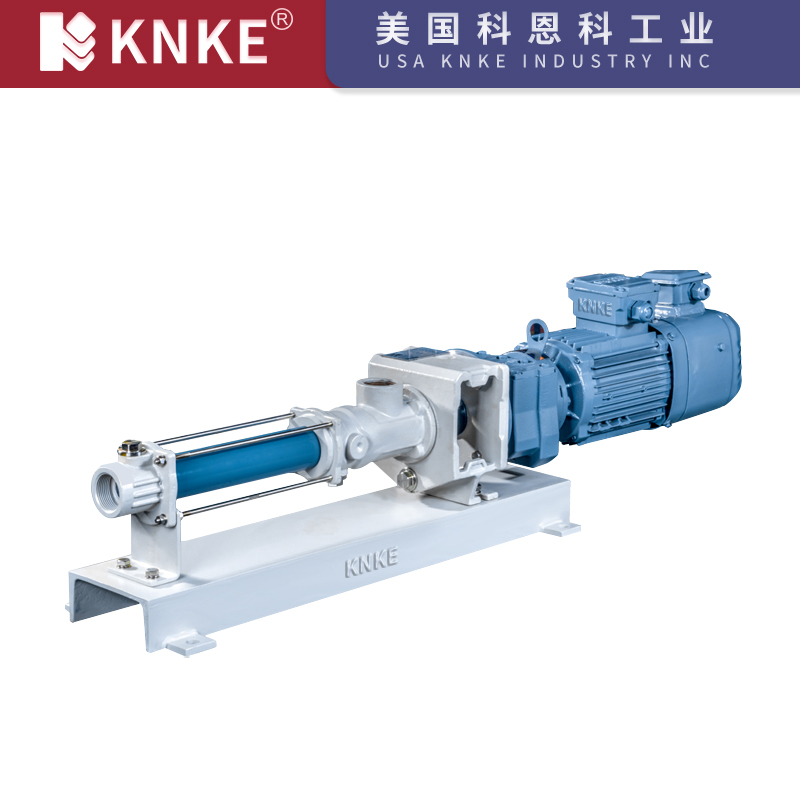
A screw pump is a type of positive displacement pump that uses one or more screw-shaped rotors to move fluids through a sealed cavity. As the rotor(s) rotate within the stator, a series of sealed chambers are formed. These chambers move continuously from the suction side to the discharge side, pushing the liquid forward in a smooth and steady flow.
In the most common single screw pump (Progressive Cavity Pump):
- The rotor is a metallic helical element, while the stator is an elastic sleeve with a matching but inverted helical shape.
- As the rotor rotates eccentrically inside the stator, cavities form, move, and disappear in sequence.
- The liquid is “progressively extruded” through these cavities, resulting in continuous and non-pulsating flow.
This gentle transfer process minimizes turbulence and shear, effectively protecting sensitive fluids while ensuring a stable output.
2. Structural Types of Screw Pumps
Depending on the number of screws and operating conditions, screw pumps can be divided into several main types:
| Type | Structural Characteristics | Typical Applications |
|---|---|---|
| Single Screw Pump | 1 rotor + 1 elastic stator | Sludge, slurry, food paste, chemical pulp |
| Twin Screw Pump | 2 synchronized screws rotating in opposite directions | Heavy oil, asphalt, resin, viscous liquids |
| Triple Screw Pump | 1 driving screw + 2 idler screws | Lubricating oil, hydraulic oil, high-pressure systems |
| Five Screw Pump | Multiple screws meshed in parallel | High-pressure, high-flow industrial systems |
Generally, more screws provide smoother flow and higher pressure capability, but also increase structural complexity. The single screw pump remains popular due to its wear resistance, simple maintenance, and strong adaptability to various media.
3. Main Advantages of Screw Pumps
Screw pumps are favored in many industries because of the following advantages:
- Stable and Pulsation-Free Flow
Continuous discharge minimizes hydraulic shocks and vibrations, ideal for processes requiring precise and steady flow. - Wide Media Compatibility
Capable of handling viscous liquids (e.g., asphalt, syrup, oil), slurries, and even gas-liquid mixtures or foaming fluids. - Excellent Self-Priming Capability
Can operate without pre-filling, suitable for intermittent or variable-level systems. - Low Noise and Vibration
Smooth screw engagement reduces mechanical impact, ideal for noise-sensitive environments. - Simple Maintenance
Fewer wearing parts, easy disassembly, and long service life reduce total operating costs.
4. Typical Applications of Screw Pumps
Screw pumps are used across a broad range of industries that require reliable high-viscosity fluid transfer.
1. Petroleum and Chemical Industry
Screw pumps efficiently handle crude oil, lubricants, asphalt, resins, and other high-viscosity or high-temperature fluids. They maintain steady flow even under fluctuating pressures and temperatures.
2. Food and Pharmaceutical Industry
Their gentle, low-shear operation makes them ideal for handling honey, syrup, fruit jam, chocolate, creams, and dairy products. They prevent foaming and maintain the integrity of sensitive materials.
3. Water Treatment and Environmental Engineering
Single screw pumps are widely used in sludge transfer, thickened sludge recirculation, and dewatered cake handling. Their self-priming and wear-resistant features make them ideal for high-solid content liquids.
4. Paper and Construction Materials Industry
Used for pumping paper pulp, coatings, lime slurry, and gypsum slurry — ensuring homogeneous transfer and minimizing air entrainment.
5. Marine and Energy Systems
Commonly used for fuel oil, lubricating oil, and cooling circulation in ships and power generation systems due to their reliability and low noise.
5. Key Factors in Screw Pump Selection
Selecting the right screw pump requires understanding the fluid properties, system requirements, and installation conditions. Key considerations include:
- Viscosity and Solid Content
Higher viscosity and solid content require lower pump speed and larger pitch to reduce wear and maintain stable flow. - Flow Rate and Pressure
Flow is proportional to rotational speed, while pressure depends on the number of stages. Single-stage pumps handle up to 6 bar, while multi-stage designs can exceed 48 bar. - Temperature and Corrosion Resistance
For high-temperature fluids, use heat-resistant materials; for acidic or alkaline media, choose corrosion-resistant alloys or special elastomers. - Installation Space and Configuration
Choose horizontal, vertical, or mobile versions based on site conditions, with flange, thread, or quick-connect fittings. - Maintenance and Spare Parts Availability
In continuous operations, consider maintenance intervals and component accessibility to minimize downtime.
6. Maintenance and Care
To ensure long-term reliable operation, proper maintenance is essential:
- Avoid Dry Running: Always fill the pump before starting to prevent stator damage.
- Inspect Stator Regularly: Replace worn or aged rubber stators to maintain sealing performance.
- Keep Seal Areas Clean: Prevent crystallization or sediment buildup.
- Check Rotor-Stator Clearance: Excessive clearance reduces efficiency.
- Lubricate and Align: Ensure motor and shaft alignment to avoid coupling wear.
Regular maintenance can extend a screw pump’s service life to over 3–5 years, significantly improving overall system performance.
7. Comparison with Other Pump Types
| Feature | Screw Pump | Centrifugal Pump | Gear Pump |
|---|---|---|---|
| Flow Characteristics | Continuous, no pulsation | Varies with pressure | Pulsating |
| Suitable Fluids | High viscosity, solids | Low viscosity, clean | Medium viscosity |
| Self-Priming Ability | Strong | Weak | Moderate |
| Shear Effect | Very low | Moderate | High |
| Maintenance Complexity | Low | Medium | Medium |
| Noise | Low | Medium | High |
From this comparison, screw pumps clearly excel in applications that require smooth, non-pulsating transfer of high-viscosity or delicate fluids.
Thanks to their unique screw-driven design, screw pumps deliver efficient and reliable transfer of high-viscosity and complex media. Their gentle flow, low noise, strong self-priming, and durability make them indispensable across industries such as chemical processing, wastewater treatment, food production, and energy systems.
Whether for continuous dosing, sludge handling, or precision fluid transfer, screw pumps provide exceptional reliability and performance. As material technology and manufacturing precision continue to advance, screw pumps will play an even greater role in future industrial applications.