
Is the KNKE Mass Flow Meter Reliable? Process Control Overview
1. Process Industry Measurement Background
Modern industrial systems rely more on flow measurement for process control. Flow measurement now plays a core role, not just a monitoring function. Chemical production, energy transfer, and gas mixing systems all require stable measurement.
Many systems face changing pressure, temperature, and composition. These changes affect traditional volumetric flow methods. Engineers often need compensation for density and temperature. This increases system complexity.
In a large chemical plant, operators feed multiple raw materials into one reaction system. They must control flow ratios continuously. Pipeline networks include several branches. They also create backflow risks. These conditions require real-time flow data for stable control.
2. Mass Flow Meter Structure and Measurement Principle
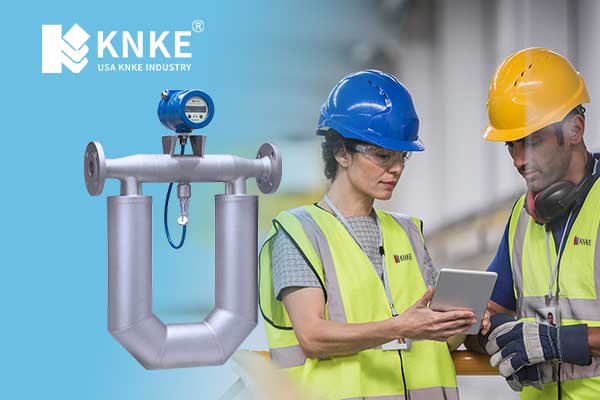
The KNKE imported mass flow meter uses Coriolis or thermal principles. It measures mass flow directly. It does not depend heavily on density or temperature compensation.
Fluid enters the sensing tube. The measuring system detects motion changes or heat transfer differences. A signal processing unit converts these signals into flow data.
This design reduces external correction requirements. It improves consistency in different media conditions. Mixed gases and multi-component liquids often change properties. The system still tracks flow trends through continuous sampling.
Engineers use this method in multi-channel processes. It reduces signal disturbance caused by unstable media conditions.
3. Industrial Application Performance
A regional chemical and energy plant uses the KNKE mass flow meter in key process lines. The system transports different media into reaction units. Flow balance affects reaction stability.
Operators adjust flow rates based on production stages. The meter provides continuous real-time data. Control systems use this data to guide valve and actuator actions.
During process transitions, flow changes gradually. The system avoids sudden data jumps. This helps reduce unnecessary control corrections.
A natural gas processing station also uses the device. It monitors gas flow after dehydration and purification. The system uses this data for compression and transport stages. It maintains consistent measurement across pressure changes.
4. Industry Challenges and KNKE System Support
Industrial users often face selection difficulties. They also deal with unstable product quality from different suppliers. Delivery delays and complex communication processes create additional challenges.
Many commissioning issues come from incorrect selection. These issues appear before operation starts. They are not always caused by equipment performance.
USA KNKE INDUSTRY INC provides system-level product standards. It supports unified design logic across flow meter products. This helps maintain consistency in product architecture.
KNKE supports project execution in the Asia-Pacific region. The team analyzes working conditions before selection. This improves matching between equipment and real process needs.
KNKE uses modular production planning. It coordinates delivery stages with project schedules. The service team provides remote diagnostics and on-site support. This reduces communication delays and improves response efficiency.
5. System Integration and Future Development
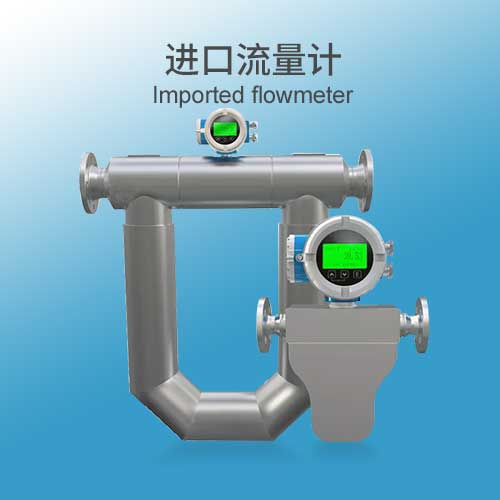
Automation systems now rely more on data integration. Mass flow meters no longer serve only as measuring tools. They also act as process data nodes.
KNKE mass flow meters connect with DCS and PLC systems. They provide continuous flow signals. Control systems use these signals for feedback and adjustment.
In multi-energy systems, engineers use the device for gas mixing control. It supports hydrogen, natural gas, and process gases. Real-time data helps stabilize dynamic adjustments.
High-purity gas systems also use mass flow measurement. These applications require stable ratio control. The device supports this requirement through continuous monitoring.
Industrial systems continue to evolve toward data transparency. Demand for multi-parameter measurement keeps increasing. Mass flow meters will play a larger role in integrated process control systems.