
Turbine Flow Meter vs Vortex Flow Meter: Key Differences, Principles, and Application Guide
In the field of industrial flow measurement, turbine flow meters and vortex flow meters are two widely used types of velocity-based instruments. Many engineers struggle with selecting the right device: What are the differences between the two? Which working conditions are they suitable for?
This article provides a full comparison based on working principle, applicable media, installation requirements, accuracy, advantages and disadvantages, pricing, and maintenance, helping you choose the ideal meter quickly and confidently.
1. Core Differences Between Turbine and Vortex Flow Meters (Quick Comparison Table)
| Comparison Item | Turbine Flow Meter | Vortex Flow Meter |
|---|---|---|
| Measuring Principle | Fluid rotates a turbine; rotational speed is proportional to flow rate | Fluid passing a bluff body forms a Kármán vortex street; vortex frequency is proportional to flow rate |
| Applicable Media | Clean liquids, low-viscosity liquids | Gases, liquids, steam |
| Measurement Accuracy | High accuracy, typically ±0.2%–±0.5% | Generally around ±1.0% |
| Straight Pipe Requirements | High | Moderate |
| Vibration Resistance | Weak | Strong |
| Maintenance Needs | Turbine may wear; regular calibration required | No moving parts; very low maintenance |
| Price Range | Medium to low | Medium to high |
| Best Applications | Batch measurement, high-precision liquid metering | Steam, compressed air, general industrial flow monitoring |
2. What Is a Turbine Flow Meter?
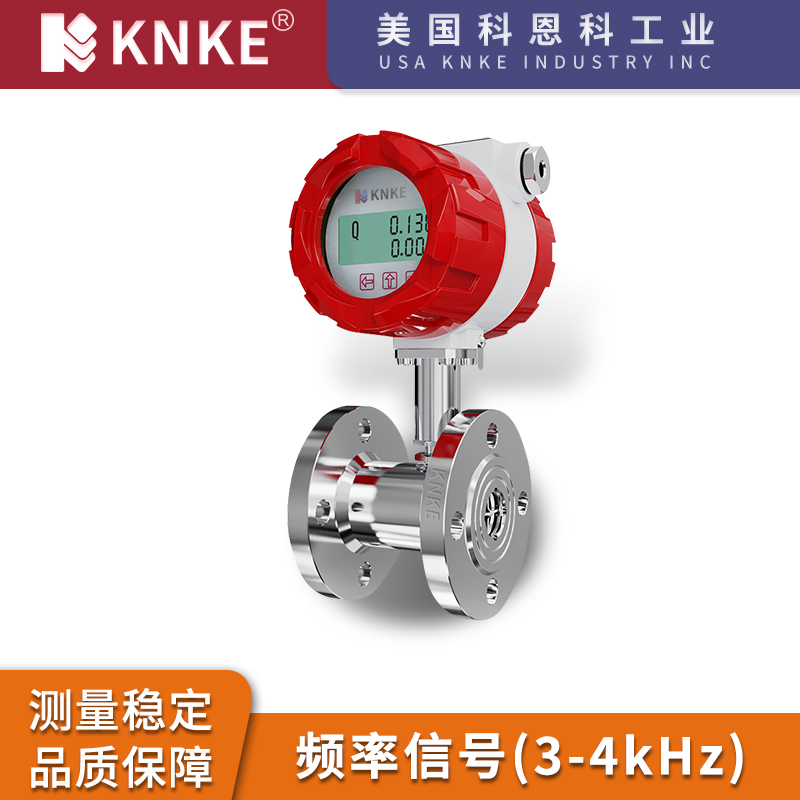
Turbine Flow Meter (TFM) operates by using fluid velocity to drive a turbine wheel, converting rotational speed into an electrical signal proportional to the flow rate.
Key Advantages
- High accuracy — ideal for trade measurement and precision applications
- Fast response
- Relatively low cost
Limitations
- Suitable only for clean liquids (solid particles cause wear)
- Not recommended for high-viscosity fluids
- Pulsating or rapidly changing flow may affect accuracy
3. What Is a Vortex Flow Meter?
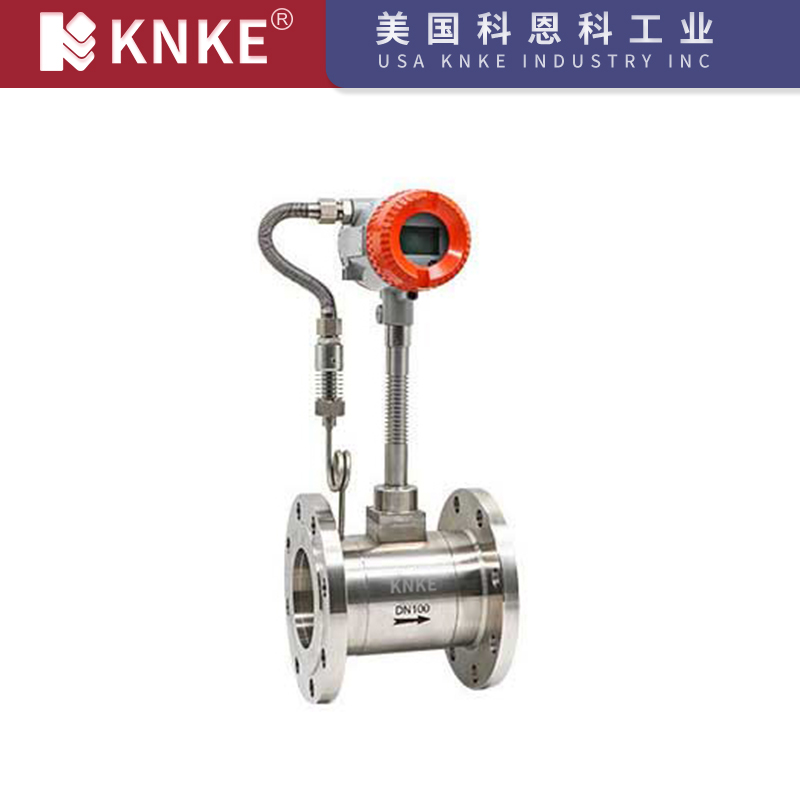
A Vortex Flow Meter operates based on the Kármán vortex street principle. When fluid passes a bluff body, alternating vortices are generated downstream; their frequency is proportional to flow velocity.
Key Advantages
- Suitable for gases, liquids, and steam (tri-medium capability)
- No moving parts — extremely low maintenance
- Excellent resistance to pressure and temperature variations
- Ideal for high-temperature applications (e.g., steam)
Limitations
- Accuracy is lower than turbine meters
- Reduced sensitivity at low flow rates
- Pipeline vibration may affect measurement
4. Turbine vs. Vortex: Practical Application Differences
1. Media Compatibility
- Turbine Flow Meter: Primarily for liquids
- Vortex Flow Meter: Excellent for steam, compressed air, and industrial gases
2. Measurement Accuracy
If high-precision metering or trade settlement is required, turbine meters are the better choice.
3. Working Condition Adaptability
- High temperature → Vortex
- Fluid with slight impurities → Vortex
- Clean, stable-flow liquids → Turbine
4. Lifespan and Maintenance
Vortex meters have no mechanical wear, making them ideal for long-term continuous operation.
5. When to Choose a Turbine or Vortex Flow Meter?
Recommended Applications for Turbine Flow Meters
- Clean liquid measurement in chemical, food, and pharmaceutical industries
- High-accuracy metering in fuel stations or trade accounting
- Small-diameter pipeline measurement
Recommended Applications for Vortex Flow Meters
- Boiler steam consumption monitoring
- Compressed air measurement
- Industrial gases such as natural gas, nitrogen, etc.
- Continuous monitoring in medium and large pipeline systems
Turbine Flow Meter = High-precision liquid measurement expert
Vortex Flow Meter = The best choice for gas and steam measurement
Both instruments have their strengths. The right choice depends on the fluid medium, flow characteristics, temperature, accuracy requirements, and long-term maintenance needs.