
Comprehensive Guide to Stainless Steel Check Valves
In industrial fluid systems, the stainless steel check valve is a critical component that prevents medium backflow and protects equipment safety. Whether used in chemical plants, food processing facilities, or municipal water treatment systems, choosing the right stainless steel check valve can significantly enhance the safety, reliability, and efficiency of your pipeline system.
This article provides a detailed overview of the valve’s working principle, material differences, selection guide, installation requirements, and maintenance tips — helping you understand and use stainless steel check valves correctly.
1. What Is a Stainless Steel Check Valve?
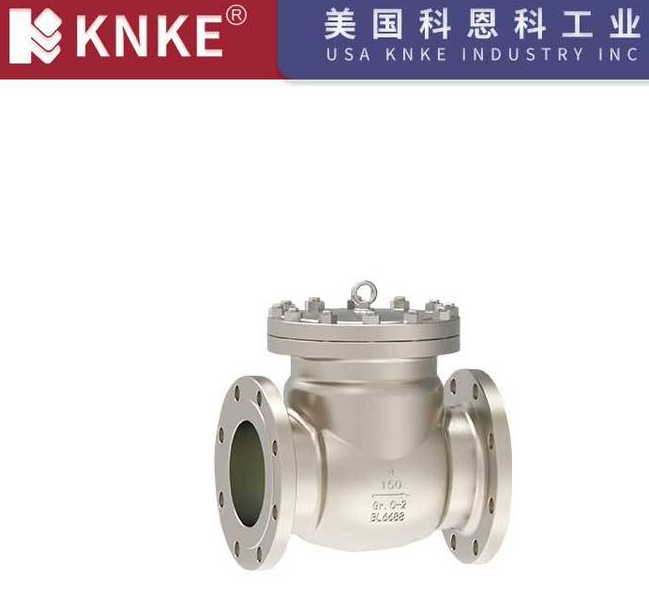
A stainless steel check valve is a valve that automatically opens and closes based on the direction of fluid flow. Its main function is to prevent reverse flow within the pipeline system.
- When the fluid flows in the forward direction, the valve disc opens automatically, allowing flow through the valve.
- When the flow reverses, the disc closes instantly, stopping the medium from returning and protecting the system.
In real-world applications, stainless steel check valves are particularly suitable for:
- Corrosive media systems such as acid, alkali, or seawater transfer;
- High-sanitation pipelines in food, beverage, or pharmaceutical industries;
- High-temperature and high-pressure conditions, including steam pipelines and boiler return systems.
2. Main Types of Stainless Steel Check Valves
- Swing Check Valve
- The disc swings open around a hinge pin.
- Offers low flow resistance; ideal for large-diameter pipelines.
- Lift Check Valve
- The disc moves vertically (up and down) to control flow.
- Provides excellent sealing performance; suitable for high-pressure, small-diameter systems.
- Wafer (Disc) Check Valve
- Compact and lightweight design for easy installation.
- The most popular type for tight-space or compact system layouts.
- Ball Check Valve
- Uses a spherical ball to open and close the flow path.
- Suitable for fluids containing solid particles or viscous media.
3. Material Options and Application Differences
| Material | Characteristics | Recommended Applications |
|---|---|---|
| 304 Stainless Steel | Excellent oxidation resistance and cost-effective | Water, air, and oil systems |
| 316 Stainless Steel | Molybdenum-enhanced for superior corrosion resistance | Chemical plants, seawater, acid & alkali fluids |
| 316L Stainless Steel | Low-carbon grade with superior weldability | Food, pharmaceutical, and ultrapure water systems |
4. Key Advantages of Stainless Steel Check Valves
(Authoritativeness — Technical Reliability)
- Prevents Backflow, Protects Equipment
Avoids damage to pumps and compressors caused by reverse flow. - Superior Corrosion Resistance
Ensures long-term stability even in humid, acidic, or marine environments. - Reliable Sealing Performance
Precision-machined valve discs minimize leakage and enhance system integrity. - Easy Installation and Maintenance
Can be installed horizontally or vertically; compact structure saves space and reduces system weight.
Thanks to these advantages, stainless steel check valves are widely adopted in chemical, pharmaceutical, food, energy, and environmental industries.
5. Selection and Installation Guidelines
Based on years of fluid control experience from KNKE Industrial (USA), the following recommendations help ensure optimal valve performance:
- Select Material According to Medium Properties
- Use 316L stainless steel for corrosive or seawater applications.
- 304 stainless steel is suitable for general water and air systems.
- Match Valve to Flow Rate and Pressure
- Ensure the valve’s cracking pressure aligns with system pressure to avoid vibration or water hammer effects.
- Observe Correct Installation Direction
- The arrow on the valve body must match the flow direction of the medium.
- Keep the Pipeline Clean
- Prevent welding slag or particles from entering the valve to maintain smooth operation.
- Perform Regular Maintenance
- Inspect the sealing surface and spring condition every 3–6 months to extend service life.
A high-quality stainless steel check valve is not only a safety device to prevent backflow but also a vital guarantee for the long-term stability of your entire fluid control system.
Whether you are an equipment engineer, procurement manager, or system designer, always consider material, structure, operating conditions, and maintenance convenience when selecting a check valve — to achieve the perfect balance between economy and safety.